
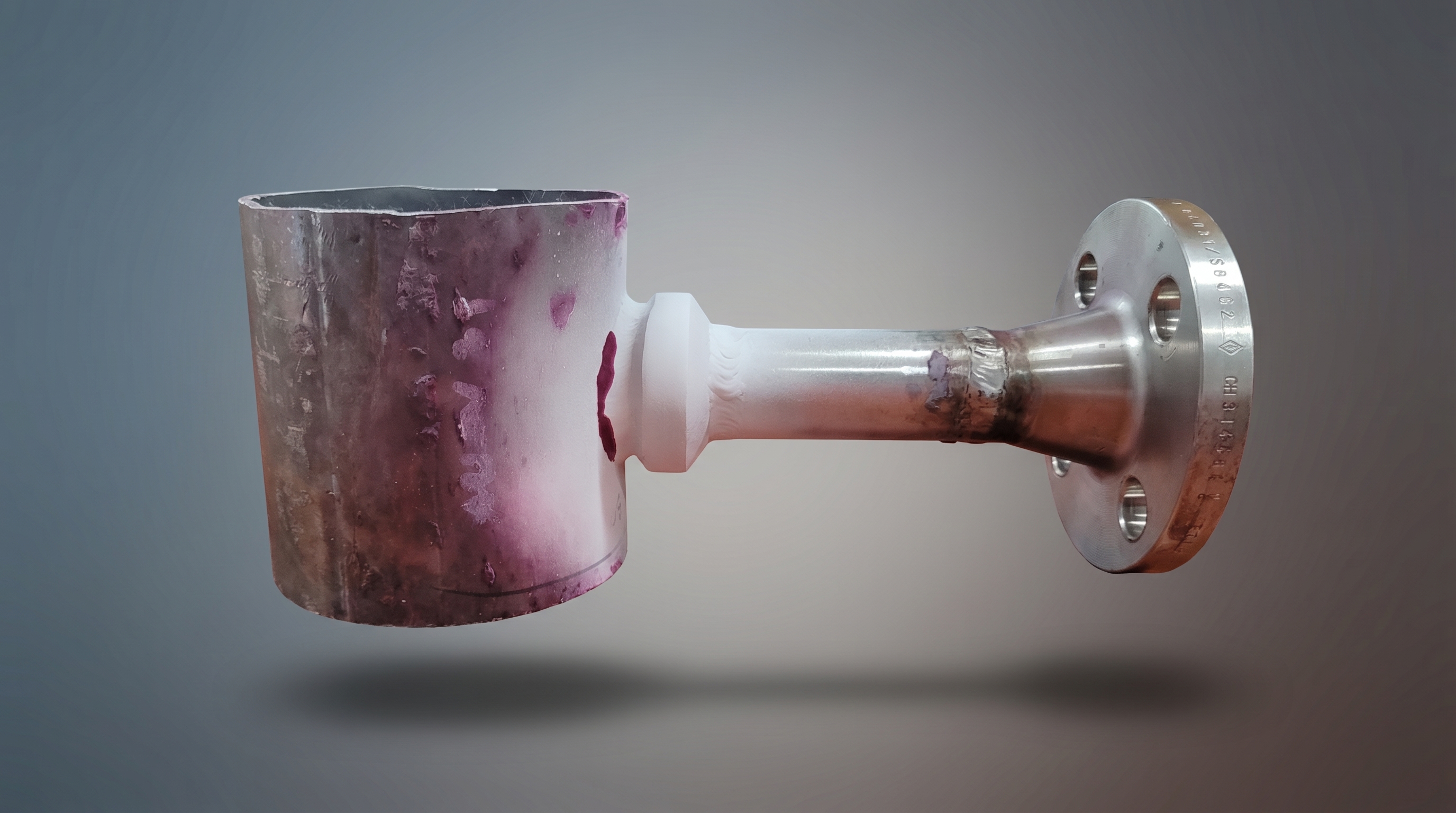
This small bore branch connection showed a localized crack indication near the weld / HAZ region, raising important questions beyond simple repair.
At first glance:
✔ No severe general corrosion
✔ No obvious external mechanical damage
✔ Crack localized near the weld transition zone
But cracks like these rarely happen “suddenly.”
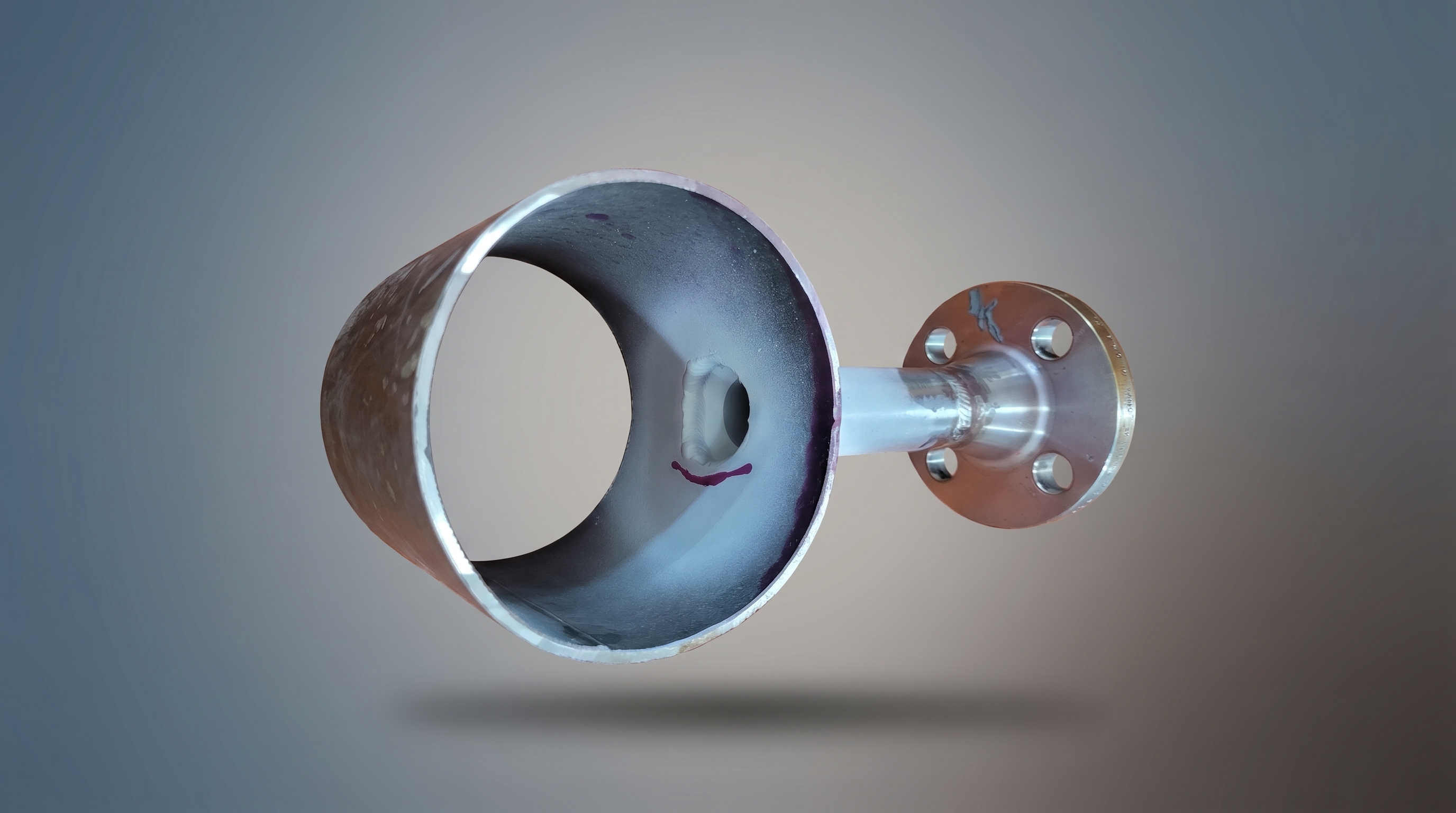
In small bore weldolet / sockolet-type connections, the combination of:
⚠️ Rapid heating and cooling during welding
⚠️ Heat Affected Zone (HAZ) metallurgical changes
⚠️ Residual stresses
⚠️ Stress concentration at the weld toe
⚠️ Vibration-induced cyclic loading
…can create ideal conditions for localized cracking.
The outer weld toe and branch transition geometry often become stress hot spots, where fatigue, hydrogen-assisted cracking, cold cracking, or HAZ weaknesses may initiate and propagate over time.
Another important consideration?
🔄 Vibration-induced fatigue.
For small bore connections, even relatively minor vibration frequencies can accumulate high fatigue cycles very quickly — sometimes within days or weeks — making traditional periodic inspection alone insufficient.
This is where the real question begins:
Is it fabrication-related? Metallurgical? Fatigue-driven? Hydrogen-assisted? Or vibration-induced?
Because the answer determines the right corrective action:
➡️ Repair?
➡️ Rework?
➡️ Replace?
➡️ Design modification?
➡️ Vibration mitigation?
At Trans Asia Industrial Laboratories, we believe DPT should be the starting point — not the conclusion.
Through advanced Failure Analysis, Metallurgical Investigation, SEM Fractography, Replica Metallography, and Root Cause Evaluation, we help industries move beyond detection to understand why the failure initiated and how recurrence can be prevented.
📩 Connect with us for advanced Failure Analysis & Metallurgical Investigation services:
🌐 Learn more about our Failure Analysis