
Ensure Reliability with Advanced NDT Solutions
Detect surface and subsurface discontinuities, verify compliance with codes, and support safe operation of critical assets.
Who We Are

We harness the power of NDT methods — to transform how industries ensure safety, reliability, and performance.
Advanced NDT Services
Through our Advanced NDT Inspection,
Ensuring No Flaw Escapes

Phased Array Ultrasonic Testing (PAUT) is an advanced non-destructive testing (NDT) technique that uses multiple ultrasonic elements and electronic beam steering to inspect materials with high precision.

Eddy Current Testing (ECT) is an advanced electromagnetic non-destructive testing (NDT) method used to detect surface and near-surface defects in conductive materials.

Pulsed Eddy Current Testing (PEC) is an advanced electromagnetic non-destructive testing (NDT) technique used for detecting corrosion and wall thinning in ferromagnetic materials, especially through insulation or coatings.
Time of Flight Diffraction (TOFD) is an advanced ultrasonic non-destructive testing (NDT) technique used for accurate detection and sizing of defects, particularly in welds.

Internal Rotary Inspection System (IRIS) is an advanced ultrasonic-based non-destructive testing (NDT) technique used for accurate inspection of tubes, particularly in heat exchangers, boilers, and condensers.

MFL is extensively applied for inspection of storage tanks, pipelines, and structural components. The method works by magnetizing the material; when there is a reduction in cross-section due to corrosion or defects, the magnetic field “leaks” out of the surface, which is detected by sensors and analyzed to determine the extent of damage.

Alternating Current Field Measurement (ACFM) is an electromagnetic NDT technique used to detect and size surface-breaking cracks in conductive materials without surface preparation, even through coatings in demanding environments.
Advanced NDT
Structural Integrity with Advanced NDT Expertise
Advanced Non-Destructive Testing (NDT) techniques combine cutting-edge technology with precise inspection methods to deliver enhanced defect detection, accurate sizing, and comprehensive material evaluation. At Trans Asia Industrial Laboratories, advanced NDT goes beyond conventional inspection by providing detailed imaging, improved coverage, and reliable data for critical decision-making. These methods are widely used in high-risk industries such as oil & gas, power generation, and aerospace, where early detection of flaws and accurate characterization are essential for ensuring safety, compliance, and long-term asset integrity.
Phased Array Ultrasonic Testing (PAUT) is an advanced ultrasonic technique using multiple probe elements and electronic beam steering to detect, size, and image defects with high accuracy in critical components.
- Multi angle beam scanning
- Real time defect imaging
- Weld inspection applications
- Precise flaw sizing capability
- Reduced inspection time
- One side access inspection
- Surface crack detection
- Near surface flaw detection
- Heat exchanger tube inspection
- Conductivity based material sorting
- Coating thickness measurement
- No couplant required
Time of Flight Diffraction (TOFD) is an advanced ultrasonic method using diffracted sound waves to accurately detect and size weld defects, providing reliable through-thickness measurements and high inspection confidence.
- Accurate crack height sizing
- Weld inspection critical applications
- Through thickness defect measurement
- Minimal orientation sensitivity
- High speed inspection capability
- Permanent digital scan records
Internal Rotary Inspection System (IRIS) is an ultrasonic technique for precise tube inspection, providing accurate wall thickness measurement and detection of internal and external corrosion in heat exchangers and boiler tubes.
- Tube wall thickness measurement
- Heat exchanger tube inspection
- Internal external corrosion detection
- Full circumferential tube scanning
- High accuracy thickness mapping
- Water coupled ultrasonic method
Magnetic Flux Leakage (MFL) is a non-destructive technique used to detect corrosion and metal loss in ferromagnetic materials by identifying magnetic field leakage caused by discontinuities and thickness reduction.
- Tank floor corrosion mapping
- Pipeline metal loss detection
- Rapid large area scanning
- Minimal surface preparation required
- Magnetic flux leakage detection
- Corrosion severity assessment
Alternating Current Field Measurement (ACFM) is an electromagnetic NDT technique used to detect and size surface-breaking cracks in conductive materials without surface preparation, even through coatings in demanding environments.
- Surface crack detection
- Crack depth sizing capability
- Inspection through coatings
- Weld inspection offshore applications
- No surface preparation required
- Minimal operator dependency

Solution to Industries for a
Safer Tomorrow
Energy
The energy industry operates under high stress and critical conditions. We support with testing, inspection, and failure analysis to ensure reliability, safety, and efficient performance.
Manufacturing
The manufacturing industry demands precision, quality, and reliability. We support with material testing, inspection, and failure analysis to ensure product performance, durability, and compliance.
Construction
The construction industry requires strong material performance and quality assurance. We support with testing, inspection, and failure analysis to ensure structural integrity, safety, and durability.
Oil & Gas
The oil and gas industry demands high reliability under extreme conditions. We support with testing, inspection, in-situ replica, and failure analysis to ensure integrity, safety, and performance.
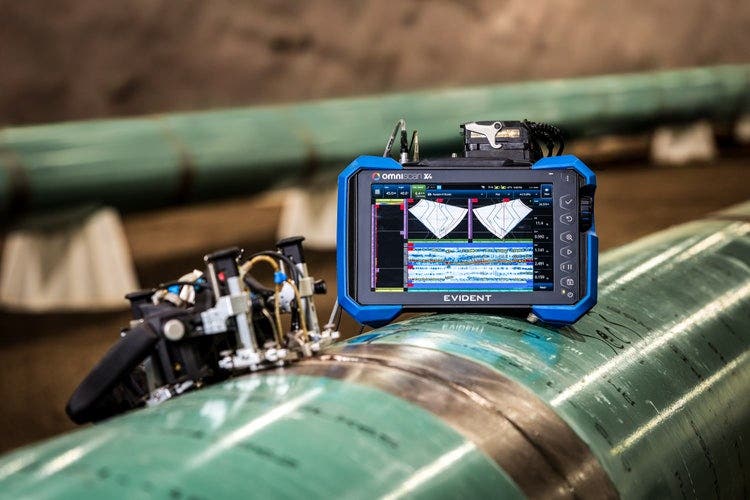
Advanced NDT
Phased Array Ultrasonic Testing (PAUT)
Phased Array Ultrasonic Testing (PAUT) is an advanced non-destructive testing (NDT) technique that uses multiple ultrasonic elements and electronic beam steering to inspect materials with high precision. At Trans Asia Industrial Laboratories, PAUT is widely used for weld inspection and critical component evaluation, offering superior defect detection, imaging, and sizing capabilities compared to conventional ultrasonic testing. By controlling the timing of individual elements, the ultrasonic beam can be angled, focused, and swept through the material, producing detailed cross-sectional images for accurate analysis.
Key Principles of PAUT
- Multiple ultrasonic elements are electronically controlled to generate and steer sound beams at various angles without physically moving the probe.
- Beam focusing improves sensitivity and allows detection of small or complex defects with higher accuracy.
- Sectorial scanning enables coverage of a wide inspection area in a single pass, improving efficiency and reliability.
- Real-time imaging provides visual representation of internal structures and discontinuities.
- Data acquisition and storage allow for detailed analysis, traceability, and reporting.
PAUT is particularly effective for inspecting welds, complex geometries, and thick sections where conventional UT may have limitations. It is widely used in industries such as oil & gas, power generation, petrochemical, and manufacturing for both fabrication and in-service inspections. The ability to generate detailed images significantly enhances defect characterization and decision-making.
Applications of PAUT
- Weld inspection in pipelines, pressure vessels, and structural components to detect cracks, lack of fusion, and inclusions with high accuracy.
- Corrosion mapping and thickness profiling for in-service equipment to assess material degradation.
- Inspection of complex geometries and components where conventional UT access is limited.
- Evaluation of critical components in power plants, refineries, and offshore structures.
- Replacement or supplementation of radiographic testing in certain applications for faster and safer inspections.
PAUT systems consist of advanced instrumentation, probes, and software that enable precise control and visualization of ultrasonic signals. The technique reduces inspection time while improving coverage and reliability.
Advantages of PAUT
- Provides detailed cross-sectional images, enabling accurate defect detection, sizing, and characterization.
- Faster inspection compared to conventional UT due to wider coverage and reduced scanning requirements.
- Requires access to only one side of the component in most cases.
- Eliminates radiation hazards associated with radiographic testing.
- Allows digital data recording for traceability, analysis, and reporting.
PAUT also supports advanced data analysis through software tools, enabling better interpretation of inspection results and improved quality assurance.
PAUT System Capabilities
- Real-time imaging and data visualization for immediate interpretation of inspection results.
- Automated scanning systems for consistent and repeatable inspections.
- Integration with advanced software for defect analysis, reporting, and documentation.
- Customizable probe configurations for different materials and applications.
- High sensitivity and resolution for detecting fine defects in critical components.
At Trans Asia Industrial Laboratories, PAUT is performed by certified experts using state-of-the-art equipment and proven procedures. Our advanced inspection capabilities ensure accurate defect detection, improved safety, and reliable assessment of asset integrity across critical industrial applications.
Advanced NDT
Eddy Current Testing (ECT)
Eddy Current Testing (ECT) is an advanced electromagnetic non-destructive testing (NDT) method used to detect surface and near-surface defects in conductive materials. At Trans Asia Industrial Laboratories, ECT is applied for rapid inspection of components such as tubes, heat exchangers, and structural parts without direct contact. The technique works by inducing alternating electrical currents (eddy currents) into the material using a probe coil; any disruption in these currents caused by defects, material variations, or discontinuities is detected and analyzed to assess integrity.
Key Principles of Eddy Current Testing
- Alternating current passed through a probe coil generates a magnetic field, inducing eddy currents within the conductive material being inspected.
- Discontinuities such as cracks, corrosion, or material variations disturb the eddy current flow, producing measurable signal changes.
- Signal variations are analyzed in terms of amplitude and phase to identify defect type and location.
- Testing is sensitive to surface and near-surface conditions, making it ideal for early defect detection.
- No couplant is required, enabling fast and clean inspection processes.
ECT is widely used in industries such as aerospace, power generation, oil & gas, and manufacturing, especially where rapid and high-sensitivity inspection is required. It is particularly effective for non-ferromagnetic materials like aluminum, copper, and stainless steel, though it can also be adapted for other conductive materials.
Applications of Eddy Current Testing
- Inspection of heat exchanger and condenser tubes to detect corrosion, pitting, and wall thinning in service conditions.
- Detection of surface cracks and fatigue damage in aircraft components and structural parts.
- Evaluation of material properties such as conductivity and thickness variations.
- Coating thickness measurement on conductive substrates without damaging the surface.
- Sorting and verification of materials based on electrical conductivity and metallurgical differences.
ECT offers significant operational advantages, particularly in terms of speed, sensitivity, and ease of application. It is commonly used for both manual and automated inspections, allowing efficient coverage of large areas or repetitive components.
Advantages of Eddy Current Testing
- Non-contact inspection method that eliminates the need for couplants or surface preparation in many applications.
- High sensitivity to small surface and near-surface defects, enabling early detection of damage.
- Rapid inspection process suitable for high-volume or automated testing environments.
- Capable of inspecting complex shapes and geometries with appropriate probe designs.
- Safe method with no radiation hazards, ensuring operator safety and ease of use.
Modern ECT systems incorporate advanced electronics and digital signal processing, enhancing defect characterization and data interpretation capabilities. Specialized techniques such as array probes and automated scanning further improve inspection efficiency and accuracy.
ECT System Capabilities
- Real-time signal display and analysis for immediate defect identification and evaluation.
- Advanced probe designs for specific applications, including tube inspection and surface scanning.
- Digital data acquisition for recording, storage, and traceability of inspection results.
- Automated scanning systems for consistent and repeatable inspections of large components.
- Integration with software tools for enhanced defect characterization and reporting.
At Trans Asia Industrial Laboratories, Eddy Current Testing is conducted using state-of-the-art equipment and experienced professionals. Our expertise ensures accurate detection of defects, reliable interpretation of results, and effective support for asset integrity, quality control, and preventive maintenance programs.
Advanced NDT
Pulsed Eddy Current Testing (PEC)
Pulsed Eddy Current Testing (PEC) is an advanced electromagnetic non-destructive testing (NDT) technique used for detecting corrosion and wall thinning in ferromagnetic materials, especially through insulation or coatings. At Trans Asia Industrial Laboratories, PEC is widely applied for inspection of insulated pipelines, vessels, and structures without the need for insulation removal. The technique works by inducing transient eddy currents into the material using a pulsed magnetic field and analyzing the decay response to evaluate thickness variations and detect corrosion.
Key Principles of Pulsed Eddy Current Testing
- A pulsed electromagnetic field is generated, inducing eddy currents into the conductive material beneath insulation or coatings.
- The decay rate of the eddy currents is influenced by the thickness and condition of the material being inspected.
- Sensors measure the time-based response, which correlates with wall thickness and corrosion levels.
- Unlike conventional eddy current, PEC can penetrate insulation and coatings effectively.
- Data is processed into thickness trends and corrosion mapping for interpretation.
PEC is particularly valuable for corrosion under insulation (CUI) detection, which is a major concern in industries such as oil & gas, petrochemical, and power generation. It allows inspection without dismantling insulation, significantly reducing downtime and inspection costs while maintaining operational efficiency.
Applications of Pulsed Eddy Current Testing
- Inspection of insulated pipelines to detect corrosion and wall thinning without removing insulation materials.
- Evaluation of pressure vessels and storage tanks for hidden corrosion beneath coatings or fireproofing.
- Detection of corrosion under insulation (CUI) in critical process equipment.
- Screening large areas quickly to identify zones requiring detailed inspection.
- Support for maintenance planning and asset integrity management programs.
PEC systems are portable and can be used in field conditions, making them suitable for rapid inspections across large industrial facilities. The technique provides average wall thickness measurements over a defined area, helping identify corrosion-prone regions efficiently.
Advantages of Pulsed Eddy Current Testing
- Enables inspection through insulation and coatings, eliminating the need for costly removal and reinstatement.
- Rapid screening method suitable for large surface areas and extensive pipeline networks.
- Non-contact technique that requires minimal surface preparation.
- Safe inspection method with no radiation hazards.
- Provides valuable data for corrosion monitoring and maintenance planning.
Modern PEC instruments incorporate advanced signal processing and software for improved accuracy and visualization. These systems allow inspectors to generate corrosion profiles and trends, supporting better decision-making and long-term asset management.
PEC System Capabilities
- Real-time data acquisition and display for immediate assessment of wall thickness and corrosion conditions.
- Capability to inspect through various insulation types and coatings of different thicknesses.
- Integration with software tools for data analysis, reporting, and trending.
- Portable and robust equipment suitable for field use in harsh environments.
- Ability to identify areas of concern for follow-up inspection using complementary NDT methods.
At Trans Asia Industrial Laboratories, Pulsed Eddy Current Testing is performed by experienced professionals using advanced equipment and standardized procedures. Our PEC services ensure reliable detection of corrosion under insulation, supporting asset integrity, safety, and efficient maintenance strategies across critical industrial systems.

Advanced NDT
Time of Flight Diffraction (TOFD)
Time of Flight Diffraction (TOFD) is an advanced ultrasonic non-destructive testing (NDT) technique used for accurate detection and sizing of defects, particularly in welds. At Trans Asia Industrial Laboratories, TOFD is widely applied for critical inspections where precise flaw characterization is required. Unlike conventional UT, TOFD relies on diffraction of ultrasonic waves from the tips of defects rather than reflection, enabling highly accurate measurement of defect height and through-thickness position. This makes TOFD especially effective for detecting crack-like discontinuities and assessing structural integrity.
Key Principles of TOFD
- Ultrasonic waves are transmitted between a pair of probes placed on opposite sides of a weld, generating lateral, backwall, and diffracted signals.
- Defects cause diffraction of sound waves from their tips, producing signals that can be used to determine precise defect location and size.
- Time-of-flight measurements are used to calculate the depth and height of discontinuities with high accuracy.
- Minimal dependence on defect orientation compared to conventional UT methods.
- Digital data acquisition enables permanent records and detailed analysis.
TOFD is particularly suited for inspection of welded joints in pipelines, pressure vessels, and structural components, where accurate sizing of defects is critical. It is often used in combination with other techniques such as PAUT to provide comprehensive inspection coverage and improved reliability.
Applications of TOFD
- Weld inspection in pipelines and pressure vessels to detect and size cracks, lack of fusion, and other critical defects.
- In-service inspection of components operating under high stress or temperature conditions.
- Fitness-for-service assessments requiring accurate flaw sizing and remaining life evaluation.
- Inspection of thick sections where conventional UT may have limitations in defect characterization.
- Replacement or supplementation of radiographic testing for faster and safer inspections.
TOFD systems consist of a transmitter and receiver probe arrangement, scanning equipment, and data acquisition systems. The technique produces B-scan images that clearly represent defect position and size, enabling reliable interpretation.
Advantages of TOFD
- Provides highly accurate defect sizing, particularly for crack height and through-thickness measurements.
- Less sensitive to defect orientation, improving reliability compared to conventional ultrasonic methods.
- Generates permanent digital records for traceability, analysis, and reporting.
- Faster inspection with reduced need for multiple probe angles and repeated scans.
- Eliminates radiation hazards associated with radiographic testing.
TOFD also offers excellent repeatability and consistency, making it suitable for automated and mechanized inspection systems. The ability to generate clear and interpretable data enhances confidence in inspection results.
TOFD System Capabilities
- High-resolution B-scan imaging for clear visualization of internal defects and structural features.
- Automated scanning systems for consistent coverage and improved inspection efficiency.
- Advanced software tools for defect sizing, analysis, and reporting.
- Capability to inspect a wide range of material thicknesses and weld configurations.
- Integration with other NDT techniques such as PAUT for comprehensive inspection solutions.
At Trans Asia Industrial Laboratories, TOFD is performed by experienced professionals using advanced equipment and standardized procedures. Our expertise ensures precise defect detection, accurate sizing, and reliable assessment of asset integrity, supporting safe operation and long-term performance of critical engineering systems.
Advanced NDT
Internal Rotary Inspection System (IRIS)
Internal Rotary Inspection System (IRIS) is an advanced ultrasonic-based non-destructive testing (NDT) technique used for accurate inspection of tubes, particularly in heat exchangers, boilers, and condensers. At Trans Asia Industrial Laboratories, IRIS is widely applied for precise wall thickness measurement and detection of internal and external corrosion in tubular components. The system uses a rotating ultrasonic beam within a water-filled tube to generate a 360-degree scan, producing highly accurate and detailed thickness profiles.
Key Principles of IRIS
- Ultrasonic waves are transmitted through a rotating mirror inside the probe, enabling full circumferential scanning of the tube wall for complete coverage.
- Water is used as a coupling medium to ensure efficient transmission of ultrasonic signals and accurate measurements.
- Reflected signals from inner and outer tube surfaces are captured to determine wall thickness precisely.
- Rotational scanning produces a helical inspection pattern, ensuring no areas are missed during evaluation.
- Data is recorded digitally, allowing detailed analysis and traceability of inspection results.
IRIS is particularly effective for non-ferromagnetic and ferromagnetic tubes, offering highly reliable results compared to conventional methods like eddy current testing when precise wall thickness measurement is required. It is commonly used in industries such as power generation, oil & gas, and petrochemical plants for condition monitoring and maintenance planning.
Applications of IRIS
- Inspection of heat exchanger and condenser tubes for internal and external corrosion, erosion, and wall thinning in service conditions.
- Evaluation of boiler tubes to assess degradation and remaining life in high-temperature environments.
- Verification of tube integrity during maintenance shutdowns and inspection campaigns.
- Detection of localized defects such as pitting, general corrosion, and mechanical damage.
- Support for asset integrity management and preventive maintenance strategies.
IRIS inspection involves inserting a probe into the tube, which rotates at high speed while being pulled through the length of the tube. The resulting data is displayed as thickness maps or B-scan images, providing clear visualization of material condition.
Advantages of IRIS
- Provides highly accurate and direct wall thickness measurements with minimal interpretation ambiguity.
- Capable of detecting both internal and external defects with equal sensitivity.
- Produces permanent digital records for analysis, reporting, and comparison over time.
- Suitable for a wide range of tube materials and diameters.
- Complements other inspection techniques such as eddy current testing for comprehensive evaluation.
IRIS systems are designed for precision and repeatability, making them ideal for critical applications where accurate measurement is essential. The technique requires clean, water-filled tubes and controlled inspection conditions for optimal performance.
IRIS System Capabilities
- 360-degree full circumferential scanning for complete tube inspection coverage.
- High-resolution thickness mapping for detailed visualization of corrosion and wear patterns.
- Automated probe rotation and controlled pull speed for consistent and repeatable results.
- Integration with advanced software for data analysis, reporting, and trending.
- Capability to inspect long tube lengths efficiently with minimal downtime.
At Trans Asia Industrial Laboratories, IRIS inspections are carried out using advanced equipment and experienced technicians to ensure precise measurement and reliable results. Our expertise supports effective condition monitoring, maintenance planning, and long-term reliability of critical heat exchanger and boiler systems.

Advanced NDT
Magnetic Flux Leakage Testing (MFL)
Magnetic Flux Leakage (MFL) is a widely used non-destructive testing (NDT) technique for detecting corrosion, metal loss, and pitting in ferromagnetic materials. At Trans Asia Industrial Laboratories, MFL is extensively applied for inspection of storage tanks, pipelines, and structural components. The method works by magnetizing the material; when there is a reduction in cross-section due to corrosion or defects, the magnetic field “leaks” out of the surface, which is detected by sensors and analyzed to determine the extent of damage.
Key Principles of MFL
- The test object is magnetized using strong permanent magnets or electromagnets to create a uniform magnetic field across the material.
- Areas with metal loss or discontinuities disturb the magnetic field, causing flux leakage at defect locations.
- Sensors detect leakage fields and convert them into electrical signals for analysis.
- Signal amplitude correlates with the depth and severity of metal loss or corrosion.
- Data is processed and displayed as corrosion maps or graphical outputs for interpretation.
MFL is particularly effective for rapid screening of large surface areas, making it a preferred method for storage tank floor inspection and pipeline integrity assessment. It does not require direct contact with the surface in many cases and can be performed with minimal surface preparation, improving efficiency in field applications.
Applications of MFL
- Inspection of storage tank floors to detect corrosion, pitting, and metal loss without removing the tank structure.
- Pipeline inspection for identifying wall thinning, corrosion, and mechanical damage affecting integrity.
- Evaluation of steel structures and plates in industrial facilities for degradation assessment.
- Screening of large surface areas quickly to prioritize maintenance and repair activities.
- Support for asset integrity management programs in oil & gas, petrochemical, and power industries.
MFL systems are often integrated with scanning devices that move across the surface, collecting continuous data. The technique provides a rapid and efficient way to identify areas requiring further detailed inspection using complementary methods.
Advantages of MFL
- High-speed inspection capability, enabling coverage of large areas in a relatively short time.
- Effective detection of corrosion and metal loss without the need for extensive surface preparation.
- Minimal contact requirement, allowing inspection through coatings or thin layers of contaminants.
- Provides immediate results and visual mapping of affected areas for quick decision-making.
- Suitable for field applications with portable and robust equipment.
Modern MFL systems incorporate advanced sensors, digital data acquisition, and software for enhanced defect characterization. These systems can generate detailed corrosion maps, enabling better understanding of degradation patterns and supporting maintenance planning.
MFL System Capabilities
- Real-time data acquisition and visualization for immediate identification of corrosion and metal loss areas.
- High-resolution scanning systems for accurate detection and mapping of defects across large surfaces.
- Integration with software tools for data analysis, reporting, and trending over time.
- Capability to inspect coated or uncoated surfaces with minimal preparation.
- Adaptability for various applications including tank floors, pipelines, and structural components.
At Trans Asia Industrial Laboratories, MFL inspections are carried out using advanced equipment and experienced professionals. Our expertise ensures reliable detection of corrosion and metal loss, supporting asset integrity, preventive maintenance, and long-term performance of critical infrastructure.
Advanced NDT
Internal Rotary Inspection System (ACFM)
Internal Rotary Inspection System (IRIS) is an advanced ultrasonic-based non-destructive testing (NDT) technique used for accurate inspection of tubes, particularly in heat exchangers, boilers, and condensers. At Trans Asia Industrial Laboratories, IRIS is widely applied for precise wall thickness measurement and detection of internal and external corrosion in tubular components. The system uses a rotating ultrasonic beam within a water-filled tube to generate a 360-degree scan, producing highly accurate and detailed thickness profiles.
Key Principles of IRIS
- Ultrasonic waves are transmitted through a rotating mirror inside the probe, enabling full circumferential scanning of the tube wall for complete coverage.
- Water is used as a coupling medium to ensure efficient transmission of ultrasonic signals and accurate measurements.
- Reflected signals from inner and outer tube surfaces are captured to determine wall thickness precisely.
- Rotational scanning produces a helical inspection pattern, ensuring no areas are missed during evaluation.
- Data is recorded digitally, allowing detailed analysis and traceability of inspection results.
IRIS is particularly effective for non-ferromagnetic and ferromagnetic tubes, offering highly reliable results compared to conventional methods like eddy current testing when precise wall thickness measurement is required. It is commonly used in industries such as power generation, oil & gas, and petrochemical plants for condition monitoring and maintenance planning.
Applications of IRIS
- Inspection of heat exchanger and condenser tubes for internal and external corrosion, erosion, and wall thinning in service conditions.
- Evaluation of boiler tubes to assess degradation and remaining life in high-temperature environments.
- Verification of tube integrity during maintenance shutdowns and inspection campaigns.
- Detection of localized defects such as pitting, general corrosion, and mechanical damage.
- Support for asset integrity management and preventive maintenance strategies.
IRIS inspection involves inserting a probe into the tube, which rotates at high speed while being pulled through the length of the tube. The resulting data is displayed as thickness maps or B-scan images, providing clear visualization of material condition.
Advantages of IRIS
- Provides highly accurate and direct wall thickness measurements with minimal interpretation ambiguity.
- Capable of detecting both internal and external defects with equal sensitivity.
- Produces permanent digital records for analysis, reporting, and comparison over time.
- Suitable for a wide range of tube materials and diameters.
- Complements other inspection techniques such as eddy current testing for comprehensive evaluation.
IRIS systems are designed for precision and repeatability, making them ideal for critical applications where accurate measurement is essential. The technique requires clean, water-filled tubes and controlled inspection conditions for optimal performance.
IRIS System Capabilities
- 360-degree full circumferential scanning for complete tube inspection coverage.
- High-resolution thickness mapping for detailed visualization of corrosion and wear patterns.
- Automated probe rotation and controlled pull speed for consistent and repeatable results.
- Integration with advanced software for data analysis, reporting, and trending.
- Capability to inspect long tube lengths efficiently with minimal downtime.
At Trans Asia Industrial Laboratories, IRIS inspections are carried out using advanced equipment and experienced technicians to ensure precise measurement and reliable results. Our expertise supports effective condition monitoring, maintenance planning, and long-term reliability of critical heat exchanger and boiler systems.