
Ensure Integrity with Proven NDT Inspection Solutions
Detect surface and subsurface discontinuities, verify compliance with codes, and support safe operation of critical assets.
Who We Are

We harness the power of NDT methods — to transform how industries ensure safety, reliability, and performance.
Conventional NDT Services
Through our Precise NDE Inspections,
Ensuring Defects Never Pass

Radiographic Testing (RT) is a volumetric non-destructive method using X-rays or gamma rays to detect internal defects in materials and welds, ensuring integrity, quality, and compliance in critical components.
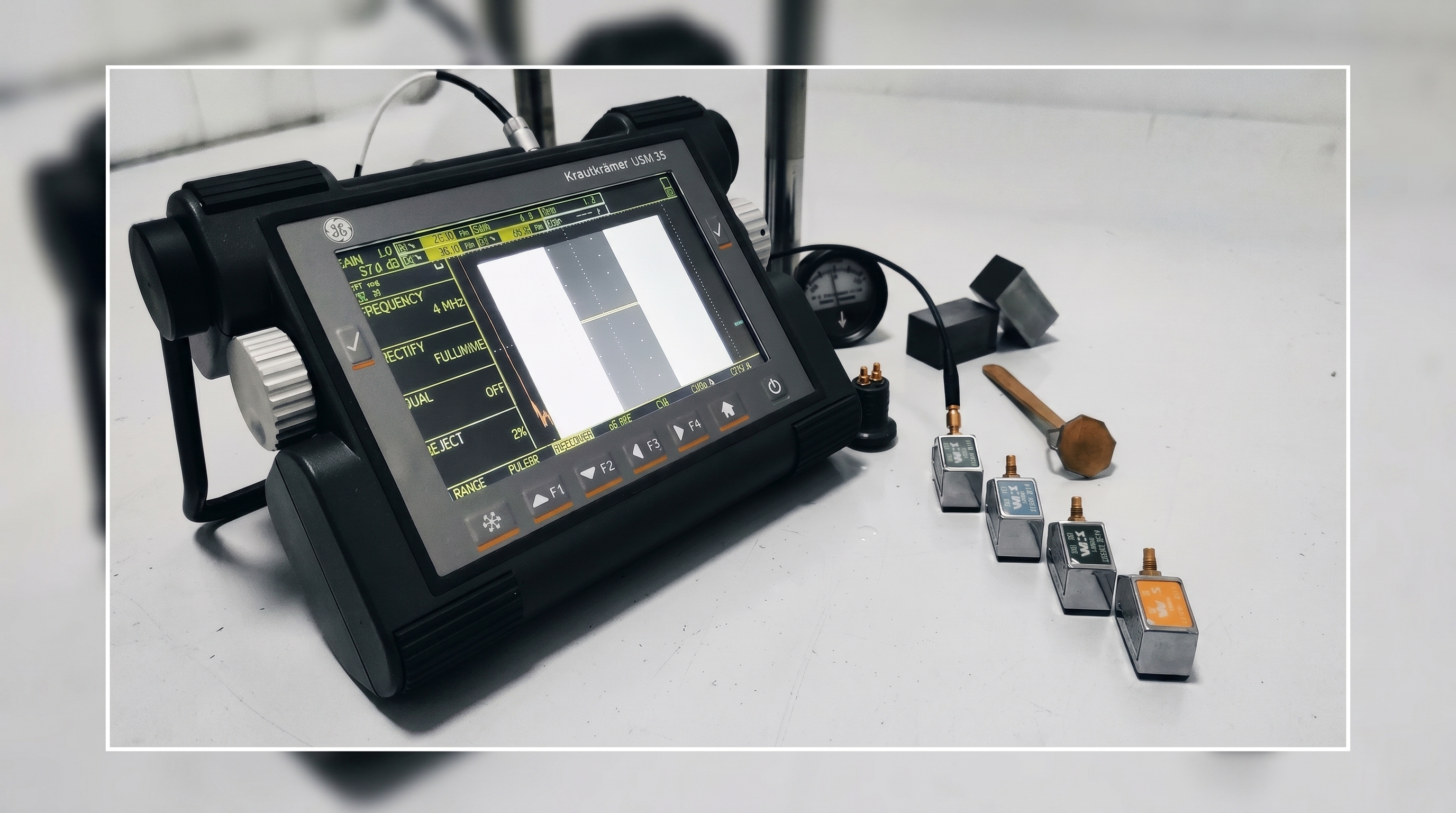
Ultrasonic Testing (UT) uses high-frequency sound waves to detect internal defects, measure thickness, and evaluate material integrity, ensuring reliable inspection of critical components without causing damage.

Liquid Penetrant Testing (PT) is a surface inspection method using penetrant dyes to reveal open-to-surface defects, ensuring detection of cracks, porosity, and discontinuities in non-porous materials.

Magnetic Particle Testing (MT) is a non-destructive method used to detect surface and near-surface discontinuities in ferromagnetic materials by applying magnetic fields and fine particles.
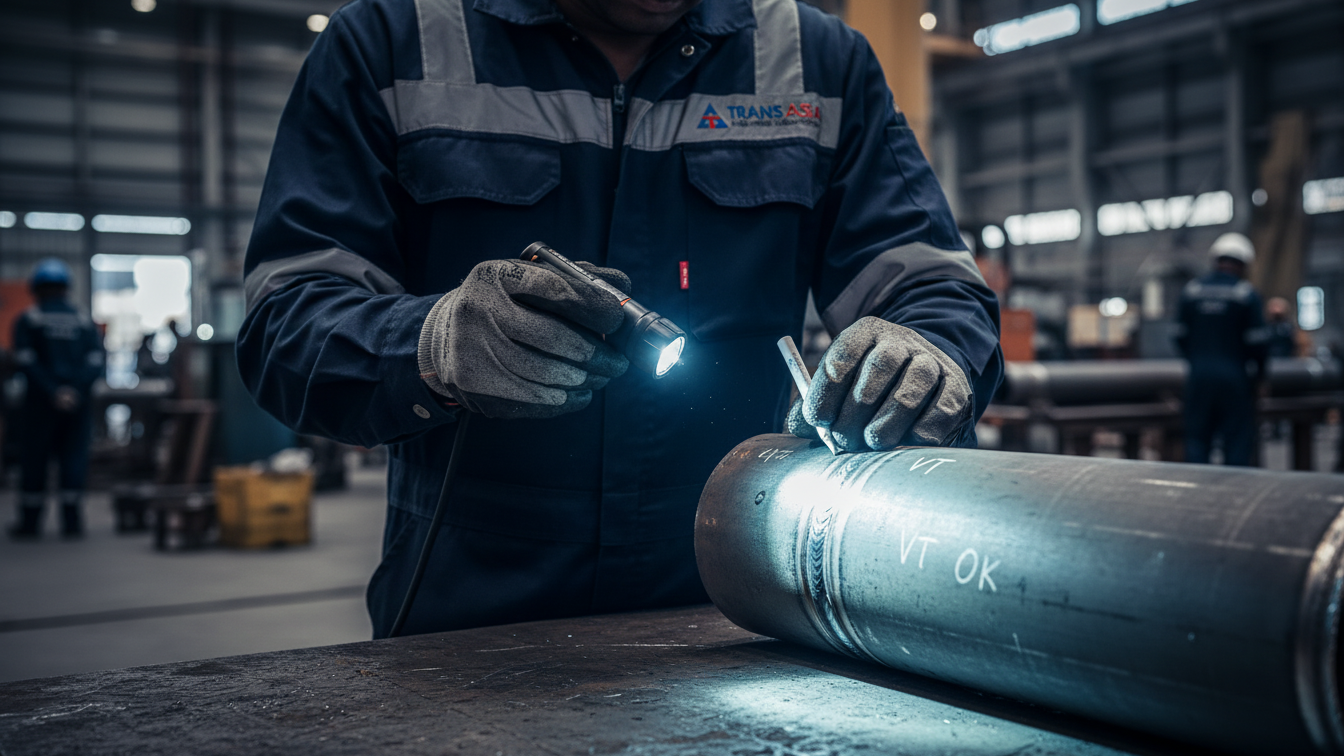
Visual Testing (VT) is the most fundamental non-destructive inspection method, involving direct observation to identify surface defects, dimensional issues, and weld quality, ensuring compliance and early defect detection.

PMI is widely applied to ensure that the correct alloy is used in critical applications, preventing material mix-ups and ensuring compliance with specifications. The technique typically uses advanced analyzers such as X-ray fluorescence (XRF) or optical emission spectroscopy (OES) to identify elemental composition quickly and accurately in both field and laboratory environments.

PWHT is applied to improve weld integrity, prevent cracking, and ensure compliance with applicable codes. Preheating raises the base metal temperature before welding to reduce thermal gradients, while PWHT is performed after welding to relieve residual stresses, temper hardened microstructures, and enhance mechanical properties.
Conventional NDT
Build Confidence with Trusted NDT Expertise
Conventional Non-Destructive Testing (NDT) comprises established inspection techniques used to evaluate the integrity, quality, and reliability of materials, welds, and components without causing damage. At Trans Asia Industrial Laboratories, these methods are applied across fabrication and in-service stages to detect surface and subsurface discontinuities, verify compliance with codes, and support safe operation of critical assets. Conventional NDT is essential in industries such as oil & gas, power generation, marine, and infrastructure, where early detection of defects helps prevent failures, reduce downtime, and ensure long-term performance.
Radiographic Testing (RT) is a volumetric non-destructive method using X-rays or gamma rays to detect internal defects in materials and welds, ensuring integrity, quality, and compliance in critical components.
- Internal defect detection
- Weld quality evaluation
- Corrosion assessment in-service
- Casting defect identification
- Thickness variation analysis
- Permanent inspection records
- Internal flaw detection
- Thickness measurement inspection
- Weld integrity evaluation
- Corrosion mapping analysis
- Crack depth sizing
- Lamination detection in plates
Liquid Penetrant Testing (PT) is a surface inspection method using penetrant dyes to reveal open-to-surface defects, ensuring detection of cracks, porosity, and discontinuities in non-porous materials.
- Surface crack detection
- Porosity identification
- Leak path detection
- Weld surface inspection
- Non-porous material testing
- Fine defect visibility
Magnetic Particle Testing (MT) is a non-destructive method used to detect surface and near-surface discontinuities in ferromagnetic materials by applying magnetic fields and fine particles.
- Surface crack detection
- Near surface defects
- Weld inspection testing
- Ferromagnetic material evaluation
- Crack orientation indication
- Manufacturing defect detection
Visual Testing (VT) is the most fundamental non-destructive inspection method, involving direct observation to identify surface defects, dimensional issues, and weld quality, ensuring compliance and early defect detection.
- Surface defect identification
- Weld quality inspection
- Dimensional verification checks
- Corrosion and damage assessment
- Assembly alignment inspection
- Pre and post inspection
Solution to Industries for a
Safer Tomorrow
Energy
The energy industry operates under high stress and critical conditions. We support with testing, inspection, and failure analysis to ensure reliability, safety, and efficient performance.
Manufacturing
The manufacturing industry demands precision, quality, and reliability. We support with material testing, inspection, and failure analysis to ensure product performance, durability, and compliance.
Construction
The construction industry requires strong material performance and quality assurance. We support with testing, inspection, and failure analysis to ensure structural integrity, safety, and durability.
Oil & Gas
The oil and gas industry demands high reliability under extreme conditions. We support with testing, inspection, in-situ replica, and failure analysis to ensure integrity, safety, and performance.
Conventional NDT
Radiography Testing (RT)
Radiographic Testing (RT), or industrial radiography, is a non-destructive testing (NDT) method used to inspect materials for hidden flaws by utilizing the ability of short wavelength electromagnetic radiation to penetrate various materials. At Trans Asia Industrial Laboratories, RT is applied to detect internal discontinuities and ensure the integrity of critical components without causing damage. Similar to medical X-rays used to detect fractures in bones, industrial radiography uses X-rays or gamma rays to produce images of materials, revealing defects that are not visible externally. This technique is widely used where internal inspection is required without dismantling components.
Key Principles of Radiographic Testing
Radiation penetrates materials and is absorbed differently based on thickness and density, creating contrast that reveals internal discontinuities such as cracks, voids, and inclusions.
X-ray or gamma radiation sources are selected based on material thickness, accessibility, and inspection requirements to achieve optimal image clarity and sensitivity.
Image Quality Indicators (IQIs) are used to verify radiographic sensitivity and ensure compliance with applicable codes and standards.
Proper exposure techniques, positioning, and safety controls are essential to obtain accurate and reliable inspection results.
Strict radiation safety measures are implemented to protect personnel and the surrounding environment during inspection operations.
Industrial radiography plays a vital role in ensuring product quality before delivery and during service life. It enables manufacturers and operators to identify defects early, preventing costly failures and ensuring compliance with safety standards. RT is particularly useful when inspection access is limited or when components cannot be dismantled.
Typical Industrial Applications
Inspection of gas and oil pipelines to detect internal corrosion, weld defects, and structural discontinuities affecting operational safety and performance.
Evaluation of welded joints in fabrication projects to identify lack of fusion, porosity, and inclusions in critical structures.
Examination of boilers and pressure vessels for internal flaws that may compromise pressure containment and reliability.
Inspection of automotive and vehicle components to ensure manufacturing quality and detect hidden defects.
Assessment of aerospace and aircraft parts where internal integrity is critical for safety and performance.
In addition to gamma radiography, X-ray radiography is widely used in controlled environments such as fabrication shops and laboratories, offering high image quality and flexibility in inspection.
X-ray Radiography – Key Aspects
Uses electrically generated X-rays, allowing operators to control radiation intensity, exposure time, and energy levels for optimized inspection quality.
Equipment can be switched on and off, providing enhanced operational safety and flexibility compared to continuous radiation sources.
Produces high-resolution images suitable for detecting fine defects in welds, castings, and precision components.
Commonly used in workshops, laboratories, and manufacturing facilities where stable power supply and controlled conditions are available.
Ideal for detailed inspection of thin to medium thickness materials with excellent sensitivity and clarity.
For field applications, gamma radiography remains highly effective due to its portability and independence from electrical power sources.
Gamma Radiography – Key Aspects
Uses radioactive isotopes as a continuous source of gamma radiation, eliminating the need for electrical power in remote or field conditions.
Compact and portable equipment enables inspection in confined spaces such as pipelines, storage tanks, and offshore structures.
Requires heavy shielding to block radiation when not in use, ensuring safety of personnel and surrounding areas.
Applicable to a wide range of materials including metals, ceramics, plastics, glass, and composite structures.
Demands strict adherence to radiation safety protocols and trained personnel for controlled operation.
Radiographic Testing offers several operational advantages, making it one of the most reliable inspection methods for critical assets across industries.
Advantages of Radiographic Testing
Enables inspection of assemblies without dismantling, saving time and reducing operational disruptions.
Detects both surface and internal discontinuities in complex structures with high accuracy.
Requires minimal surface preparation compared to other inspection techniques.
Provides permanent radiographic records for traceability, documentation, and quality audits.
Allows measurement of defect size, orientation, and geometry for detailed evaluation and decision-making.
At Trans Asia Industrial Laboratories, RT is conducted using advanced equipment and certified professionals, ensuring accurate defect detection, reliable interpretation, and compliance with international standards. Our integrated approach supports asset integrity, quality assurance, and failure prevention across diverse industrial applications.

Conventional NDT
Ultrasonic Testing (UT)
Ultrasonic Testing (UT) is a widely used non-destructive testing (NDT) method for detecting and sizing sub-surface defects in materials. It works by transmitting high-frequency sound waves into a component and analyzing the reflected signals from internal features. At Trans Asia Industrial Laboratories, UT is applied to identify flaws such as cracks, inclusions, and lack of fusion with high accuracy. The reflected sound waves generate distinct echo patterns, allowing precise evaluation of defect location, size, and orientation without causing damage to the material.
Key Principles of Ultrasonic Testing
- High-frequency sound waves are introduced into the material and reflected back from internal discontinuities, producing echo patterns for defect detection and analysis.
- Time-of-flight measurement helps determine the depth and location of defects within the material accurately.
- Signal amplitude and waveform characteristics are used to estimate defect size and nature.
- Couplant gel ensures efficient transmission of sound waves between probe and test surface.
- Calibration with reference blocks ensures reliability and compliance with inspection standards.
Ultrasonic inspection is highly versatile and widely used across industries such as oil & gas, power generation, and manufacturing. Portable instruments are capable of recording and displaying echo patterns in real time, making UT an efficient and safe inspection technique. It is particularly effective for evaluating welds, castings, and structural metals where internal integrity is critical.
Applications of Ultrasonic Testing
- Detection and sizing of internal defects in welds, castings, and forged components to ensure structural reliability.
- Thickness measurement and corrosion monitoring in pipelines, pressure vessels, and storage tanks.
- Identification of crack-like defects and laminations in plates and structural materials.
- Inspection of critical components in service without dismantling or interrupting operations.
- Quality control during manufacturing processes for defect-free production.
Ultrasonic Testing offers several advantages over other inspection methods, particularly due to its safety, portability, and ability to detect a wide range of defects with high precision.
Advantages of Ultrasonic Inspection
- Capable of detecting and accurately sizing internal defects, including both volumetric and crack-like discontinuities.
- Inspection time is relatively consistent for both thick and thin specimens, improving efficiency.
- Requires access to only one side of the component, making it suitable for complex structures.
- No radiation hazard, ensuring safe operation compared to radiographic methods.
- Effective in detecting defects regardless of their orientation within the material.
At Trans Asia Industrial Laboratories, Ultrasonic Testing is conducted using advanced equipment and experienced personnel to ensure precise defect detection and reliable interpretation. Our UT services support asset integrity, quality assurance, and failure prevention across critical engineering applications.

Conventional NDT
Liquid Penetrant Testing (PT)
Liquid Penetrant Testing (PT), also known as Dye Penetrant Inspection (DPI), is a widely used non-destructive testing (NDT) method for detecting surface-breaking defects in non-porous materials. At Trans Asia Industrial Laboratories, PT is applied to reveal discontinuities such as cracks, porosity, laps, and leaks that are open to the surface. The method works on the principle of capillary action, where a liquid penetrant enters defects and is later drawn out to form visible indications, enabling accurate defect detection.
Key Principles of Liquid Penetrant Testing
- Capillary action allows penetrant liquid to seep into fine surface-breaking defects that are not visible to the naked eye.
- Excess penetrant is removed carefully to ensure only defect-trapped penetrant remains for accurate inspection.
- Developer draws penetrant back to the surface, forming clear indications of discontinuities.
- Proper surface preparation is essential to remove contaminants that may hinder penetrant entry.
- Inspection can be carried out using visible dye or fluorescent methods for enhanced sensitivity.
In addition to conventional PT, Fluorescent Penetrant Testing (FPT) is used for higher sensitivity inspections. In this method, fluorescent dyes are used, and indications are observed under ultraviolet (UV) light, making even the smallest defects highly visible. FPT is commonly used in critical applications such as aerospace, precision components, and high-reliability industries where detection of very fine cracks is essential.
Applications of Liquid & Fluorescent Penetrant Testing
- Detection of surface cracks in welds, castings, and machined components to ensure structural integrity and compliance.
- Identification of porosity, seams, laps, and other surface discontinuities in manufacturing processes.
- Inspection of aerospace and high-precision components using fluorescent methods for enhanced sensitivity.
- Leak path detection in pressure vessels and critical assemblies.
- Quality control and maintenance inspection across oil & gas, automotive, and engineering industries.
The PT process involves a sequence of controlled steps to ensure accurate and repeatable results, whether using visible or fluorescent penetrants.
Typical PT Process Steps
- Surface cleaning to remove oil, dirt, and contaminants that may block penetrant entry into defects.
- Application of penetrant and allowing sufficient dwell time for proper penetration into discontinuities.
- Removal of excess penetrant without disturbing penetrant trapped in defects.
- Application of developer to draw penetrant out and enhance visibility of indications.
- Inspection under visible light or UV light (for fluorescent testing) to identify and interpret defects.
Liquid Penetrant Testing, especially when combined with fluorescent techniques, offers several advantages for surface inspection.
Advantages of Liquid & Fluorescent Penetrant Testing
- Highly sensitive method capable of detecting extremely fine surface-breaking defects.
- Fluorescent penetrant enhances visibility, making it ideal for critical and high-precision applications.
- Applicable to a wide range of non-porous materials regardless of shape or complexity.
- Simple, cost-effective, and adaptable for both field and laboratory inspections.
- Provides clear visual indications that are easy to interpret and document.
At Trans Asia Industrial Laboratories, PT and Fluorescent PT are performed using high-quality materials, controlled procedures, and experienced personnel to ensure reliable defect detection. Our services support quality assurance, safety, and performance across critical engineering applications.
Conventional NDT
Magnetic Particle Testing (MPT)
Magnetic Particle Testing (MT), also known as Magnetic Particle Inspection (MPI), is a widely used non-destructive testing (NDT) method for detecting surface and near-surface discontinuities in ferromagnetic materials. At Trans Asia Industrial Laboratories, MT is applied to identify defects such as cracks, seams, laps, and inclusions that may compromise structural integrity. The method works by magnetizing the component and applying fine magnetic particles, which accumulate at areas of flux leakage caused by discontinuities, forming visible indications.
Key Principles of Magnetic Particle Testing
- A magnetic field is induced in the component, and any discontinuity disturbs the magnetic flux, creating leakage fields at defect locations.
- Magnetic particles are attracted to these leakage fields, forming visible indications that outline the defect shape and orientation.
- Both dry powder and wet suspension particles can be used depending on application and sensitivity requirements.
- Inspection can be performed using visible particles or fluorescent particles under ultraviolet light for enhanced detection.
- Proper magnetization direction is critical to ensure defects are oriented perpendicular to the magnetic field for maximum sensitivity.
Magnetic Particle Testing is particularly effective for inspecting welds, forgings, castings, and machined components made of ferromagnetic materials such as carbon steel and low-alloy steels. It is widely used in industries like oil & gas, construction, power generation, and manufacturing for both fabrication and maintenance inspections.
Applications of Magnetic Particle Testing
- Detection of surface and near-surface cracks in welds, ensuring structural integrity and compliance with applicable standards.
- Inspection of forged and machined components to identify laps, seams, and manufacturing defects.
- Evaluation of in-service components for fatigue cracks and stress-related damage.
- Quality control in fabrication processes for pipelines, pressure vessels, and structural components.
- Maintenance inspection of critical equipment to prevent unexpected failures.
The MT process involves magnetization, application of magnetic particles, and interpretation of indications. Proper surface preparation and cleaning are essential to ensure accurate results and prevent false indications.
Typical MT Process Steps
- Cleaning the surface to remove dirt, oil, or scale that may interfere with magnetic particle movement and indication clarity.
- Magnetizing the component using appropriate techniques such as yoke, coil, or prods.
- Applying magnetic particles in dry or wet form to reveal discontinuities through particle accumulation.
- Inspecting the component under suitable lighting conditions, including UV light for fluorescent particles.
- Demagnetizing and cleaning the component after inspection to restore its original condition.
Magnetic Particle Testing offers several advantages, making it one of the most reliable methods for detecting surface-related defects in ferromagnetic materials.
Advantages of Magnetic Particle Testing
- Highly sensitive to surface and near-surface defects, providing clear and well-defined indications.
- Quick and cost-effective inspection method suitable for both field and workshop environments.
- Capable of detecting fine cracks and discontinuities that may not be visible through visual inspection.
- Applicable to complex shapes and large components with minimal preparation.
- Provides immediate results, enabling rapid decision-making during inspection and maintenance.
At Trans Asia Industrial Laboratories, MT is performed by certified inspectors using calibrated equipment and standardized procedures. Our expertise ensures accurate detection and interpretation of defects, supporting quality assurance, safety, and long-term reliability of critical engineering assets.
Conventional NDT
Visual Testing (VT)
Visual Testing (VT) is the most fundamental and widely applied non-destructive testing (NDT) method, involving direct observation of components to identify surface defects, dimensional deviations, and overall condition. At Trans Asia Industrial Laboratories, VT serves as the first line of inspection in both fabrication and in-service evaluations. It enables early detection of visible discontinuities such as cracks, corrosion, misalignment, and weld imperfections, ensuring compliance with specifications and preventing further damage. VT can be performed with the naked eye or enhanced using advanced tools.
Key Principles of Visual Testing
- Inspection is based on direct observation under adequate lighting conditions to identify visible defects and irregularities on component surfaces.
- Surface cleanliness is essential to ensure accurate detection of discontinuities such as cracks, corrosion, or weld defects.
- Use of optical aids enhances inspection capability for small or inaccessible areas.
- Inspection criteria are defined by applicable codes, standards, and acceptance limits.
- Documentation of findings provides traceability and supports quality assurance processes.
Visual Testing is applicable across a wide range of industries including oil & gas, construction, manufacturing, and power generation. It is used during fabrication, installation, and maintenance stages to ensure that components meet design and safety requirements. VT is often combined with other NDT methods to provide a comprehensive evaluation of material integrity.
Applications of Visual Testing
- Inspection of weld joints for surface defects such as cracks, undercut, porosity, and improper bead profile.
- Detection of corrosion, erosion, and mechanical damage in in-service equipment and structures.
- Verification of dimensional accuracy, alignment, and assembly conditions during fabrication and installation.
- Examination of coatings and surface finishes for defects such as blistering, peeling, or discontinuities.
- Pre- and post-inspection support for other NDT methods to ensure readiness and validate results.
An important extension of VT is Borescopic Examination (Remote Visual Inspection), which allows inspection of internal or inaccessible areas without dismantling equipment. Using flexible or rigid borescopes equipped with cameras and lighting, inspectors can visually assess internal surfaces of pipelines, turbines, heat exchangers, and machinery components.
Borescopic Examination (RVI) Capabilities
- Enables inspection of internal surfaces in confined or inaccessible areas without disassembly of components.
- Provides real-time visual feedback using high-resolution cameras and integrated lighting systems.
- Detects internal defects such as corrosion, cracks, deposits, and foreign objects.
- Allows recording and documentation of inspection findings for analysis and reporting.
- Enhances safety by reducing the need for manual entry into hazardous or restricted spaces.
Visual Testing can be performed using both direct and remote techniques. Proper lighting, viewing angle, and inspector expertise are critical factors influencing inspection effectiveness.
Types of Visual Testing Techniques
- Direct visual inspection using the naked eye or simple tools for accessible surfaces and components.
- Remote visual inspection using borescopes, fiberscopes, or cameras for confined or hazardous areas.
- Enhanced visual inspection using magnification devices to detect fine surface defects.
- Video inspection systems for real-time monitoring and recording of inspection results.
- Automated visual inspection systems for repetitive and high-volume inspection tasks.
Visual Testing offers several advantages, making it an essential part of any inspection program.
Advantages of Visual Testing
- Simple and cost-effective method requiring minimal equipment and setup.
- Provides immediate results, enabling quick decision-making during inspection processes.
- Applicable to a wide range of materials, components, and structures.
- Non-invasive and safe, with no hazards such as radiation or chemical exposure.
- Serves as a preliminary inspection method to guide further NDT techniques.
At Trans Asia Industrial Laboratories, Visual Testing and borescopic examination are carried out by qualified inspectors using advanced equipment and standardized procedures. Our services ensure accurate detection of defects, supporting quality control, asset integrity, and long-term reliability.
Conventional NDT
Positive Material Identification (PMI)
Positive Material Identification (PMI) is a non-destructive testing (NDT) technique used to determine the chemical composition of metallic materials and verify their grade. At Trans Asia Industrial Laboratories, PMI is widely applied to ensure that the correct alloy is used in critical applications, preventing material mix-ups and ensuring compliance with specifications. The technique typically uses advanced analyzers such as X-ray fluorescence (XRF) or optical emission spectroscopy (OES) to identify elemental composition quickly and accurately in both field and laboratory environments.
Key Principles of PMI
- XRF analyzers use X-rays to excite atoms in the material, causing them to emit characteristic energy signatures used to identify elemental composition.
- OES technology uses spark emission to analyze elements, including light elements such as carbon, providing more detailed composition data.
- Each material grade has a unique chemical fingerprint, allowing precise identification and verification against standards.
- Portable instruments enable in-situ testing without removing components from service.
- Results are displayed instantly, supporting real-time decision-making and quality control.
PMI plays a critical role in industries such as oil & gas, petrochemical, power generation, and manufacturing, where incorrect material selection can lead to catastrophic failures. It is commonly used during fabrication, installation, and maintenance to verify material traceability and ensure compliance with project specifications and international codes.
Applications of PMI
- Verification of alloy grades in pipelines, pressure vessels, and structural components to ensure compliance with design specifications.
- Detection of material mix-ups during fabrication and installation processes.
- Identification of unknown materials in maintenance and repair activities.
- Quality control for incoming raw materials and finished products.
- Support for failure analysis by confirming material composition and identifying deviations.
PMI can be performed directly on-site using portable analyzers, making it a fast and efficient method for material verification. The technique requires minimal surface preparation and does not damage the component, allowing repeated inspections if required.
Advantages of PMI
- Rapid and accurate identification of material composition, enabling immediate verification and decision-making.
- Non-destructive testing method that preserves the integrity of the component being inspected.
- Portable equipment allows on-site inspection in remote or confined locations.
- Reduces risk of material mix-ups, enhancing safety and reliability of critical systems.
- Supports compliance with international standards and project specifications.
Modern PMI systems incorporate advanced software and data management capabilities, enabling efficient storage, reporting, and traceability of inspection results. These systems enhance quality assurance processes and provide valuable documentation for audits and certification.
PMI System Capabilities
- Real-time elemental analysis with digital display and data storage for traceability and reporting.
- Capability to analyze a wide range of alloys including stainless steel, carbon steel, and exotic materials.
- Integration with software tools for report generation and data management.
- High accuracy and repeatability for consistent inspection results.
- Flexibility for both field and laboratory testing applications.
At Trans Asia Industrial Laboratories, PMI is carried out using advanced analyzers and experienced professionals to ensure precise material verification. Our services support quality assurance, regulatory compliance, and asset integrity across critical industrial applications.
Conventional NDT
Post Weld Heat Treatment (PWHT)
Pre-weld heat treatment (commonly called preheating) and Post-Weld Heat Treatment (PWHT) are critical thermal processes used to control metallurgical transformations and residual stresses in welded components. At Trans Asia Industrial Laboratories, these treatments are applied to improve weld integrity, prevent cracking, and ensure compliance with applicable codes. Preheating raises the base metal temperature before welding to reduce thermal gradients, while PWHT is performed after welding to relieve residual stresses, temper hardened microstructures, and enhance mechanical properties.
Objectives of Pre-Weld Heat Treatment
- Reduces cooling rate of the weld area, minimizing formation of brittle microstructures such as martensite in hardenable steels.
- Lowers hydrogen diffusion rate, thereby reducing the risk of hydrogen-induced cracking in weld zones.
- Minimizes thermal stresses caused by rapid temperature differences during welding operations.
- Improves weld penetration and fusion by maintaining stable thermal conditions at the joint.
- Enhances overall weld quality and consistency, especially in thick or high-strength materials.
Preheating is especially important for carbon steels, low-alloy steels, and materials with higher carbon equivalent values. The required preheat temperature depends on material composition, thickness, welding process, and environmental conditions, and is typically controlled using calibrated temperature measurement devices.
Objectives of Post-Weld Heat Treatment (PWHT)
- Relieves residual stresses generated during welding, reducing the risk of distortion and cracking during service.
- Tempers hardened microstructures in the heat-affected zone (HAZ), improving toughness and ductility.
- Reduces susceptibility to stress corrosion cracking in aggressive service environments.
- Enhances dimensional stability and long-term performance of welded components.
- Ensures compliance with design codes and standards such as ASME, API, and ISO.
PWHT is commonly applied to pressure vessels, pipelines, boilers, and structural components where weld integrity is critical. The process involves controlled heating, soaking at a specified temperature, and gradual cooling under monitored conditions to achieve desired metallurgical properties.
PWHT Process Steps
- Controlled heating of the welded component using electrical resistance heaters or furnace systems to reach the specified temperature uniformly.
- Soaking period maintained at the target temperature to allow stress relief and microstructural transformation.
- Monitoring of temperature using thermocouples and recording instruments to ensure compliance with procedures.
- Controlled cooling to avoid thermal shock and formation of undesirable microstructures.
- Documentation of the entire heat treatment cycle for quality assurance and traceability.
Both preheating and PWHT require strict adherence to procedures and standards to ensure effectiveness. Parameters such as heating rate, soaking temperature, holding time, and cooling rate must be carefully controlled and documented.
Advantages of Preheat & PWHT
- Significantly reduces risk of weld cracking, including hydrogen-induced and cold cracking in susceptible materials.
- Improves mechanical properties such as toughness, ductility, and fatigue resistance of welded joints.
- Enhances service life and reliability of critical components operating under high stress or temperature conditions.
- Minimizes residual stresses, reducing distortion and improving dimensional stability.
- Ensures compliance with international codes and project specifications.
At Trans Asia Industrial Laboratories, pre-weld and post-weld heat treatment services are performed using advanced equipment and experienced professionals. Our expertise ensures precise temperature control, reliable process execution, and full compliance with applicable standards, supporting weld quality, safety, and long-term performance of engineering assets.

Conventional NDT
Portable Hardness Testing
Portable Hardness Testing is a versatile non-destructive testing (NDT) method used to measure the hardness of materials directly on-site without removing components from service. At Trans Asia Industrial Laboratories, portable hardness testing is widely applied for asset integrity assessments, weld evaluation, and material verification in industries such as oil & gas, power, and construction. The technique provides quick and reliable hardness values, helping to assess material strength, heat treatment condition, and susceptibility to cracking under operational environments.
Key Principles of Portable Hardness Testing
- Portable devices use methods such as rebound (Leeb), ultrasonic contact impedance (UCI), or dynamic indentation to determine hardness values accurately in field conditions.
- Hardness is correlated to material strength and mechanical properties, providing insight into performance and service behavior.
- Minimal surface preparation is required, enabling rapid inspection without affecting component integrity.
- Measurements can be taken on large, fixed, or complex structures where conventional testing is not feasible.
- Results are displayed instantly, allowing immediate evaluation and decision-making during inspection.
Portable hardness testing is particularly useful for in-situ inspection of welded joints, pressure vessels, pipelines, and structural components. It helps identify variations in hardness that may indicate improper heat treatment, material degradation, or risk of brittle fracture, especially in critical service conditions.
Applications of Portable Hardness Testing
- On-site hardness measurement of welds to verify compliance with welding procedures and detect excessive hardness in heat-affected zones.
- Assessment of base material properties in pipelines, pressure vessels, and structural components during maintenance inspections.
- Verification of heat treatment effectiveness, including preheat and post-weld heat treatment (PWHT) validation.
- Detection of material degradation or microstructural changes due to service conditions such as high temperature or corrosion.
- Support for failure analysis by correlating hardness values with material behavior and performance.
Portable hardness testing offers several advantages, making it an essential tool for field inspection and quality control. It eliminates the need for sample extraction and laboratory testing, reducing downtime and operational costs.
Advantages of Portable Hardness Testing
- Enables rapid, non-destructive hardness measurement directly on components without dismantling or sample removal.
- Suitable for large, heavy, or fixed structures where laboratory testing is impractical.
- Provides immediate results, facilitating quick decision-making during inspections.
- Portable and easy-to-use equipment allows flexibility in field applications.
- Supports compliance with standards and enhances overall quality assurance processes.
Modern portable hardness testers are equipped with advanced digital displays, data storage, and connectivity features, enabling efficient documentation and reporting. These systems improve accuracy and repeatability, ensuring reliable results across different inspection conditions.
Portable Hardness Testing Capabilities
- Capability to measure hardness across various scales such as HB, HV, and HRC with appropriate conversion standards.
- Adaptability for different materials including steels, alloys, and non-ferrous metals.
- Data logging and reporting features for traceability and quality documentation.
- Ability to perform testing in multiple orientations and challenging field conditions.
- Integration with inspection programs for comprehensive asset integrity evaluation.
At Trans Asia Industrial Laboratories, portable hardness testing is conducted by experienced professionals using calibrated equipment and standardized procedures. Our services ensure accurate hardness evaluation, supporting weld quality control, asset integrity, and reliable performance of critical engineering systems.