
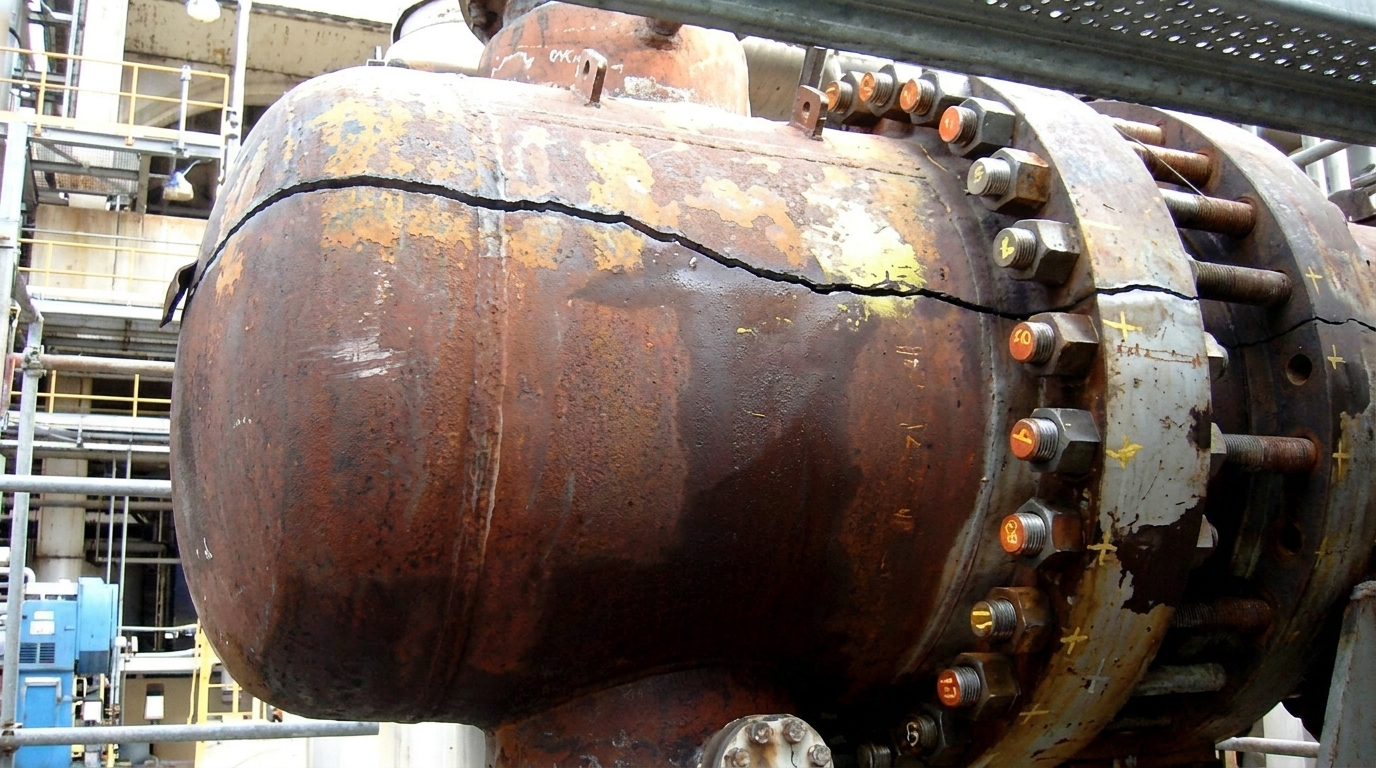
At Trans Asia Industrial Laboratories, when we approach a new technical problem, we don’t start with equipment.
We start with questions.
Because the quality of an investigation depends less on the tool — and more on how the problem is understood from the beginning.
Whether it is a failure investigation, material degradation issue, weld defect, recurring equipment breakdown, or unexpected performance problem, our approach follows a structured engineering path:
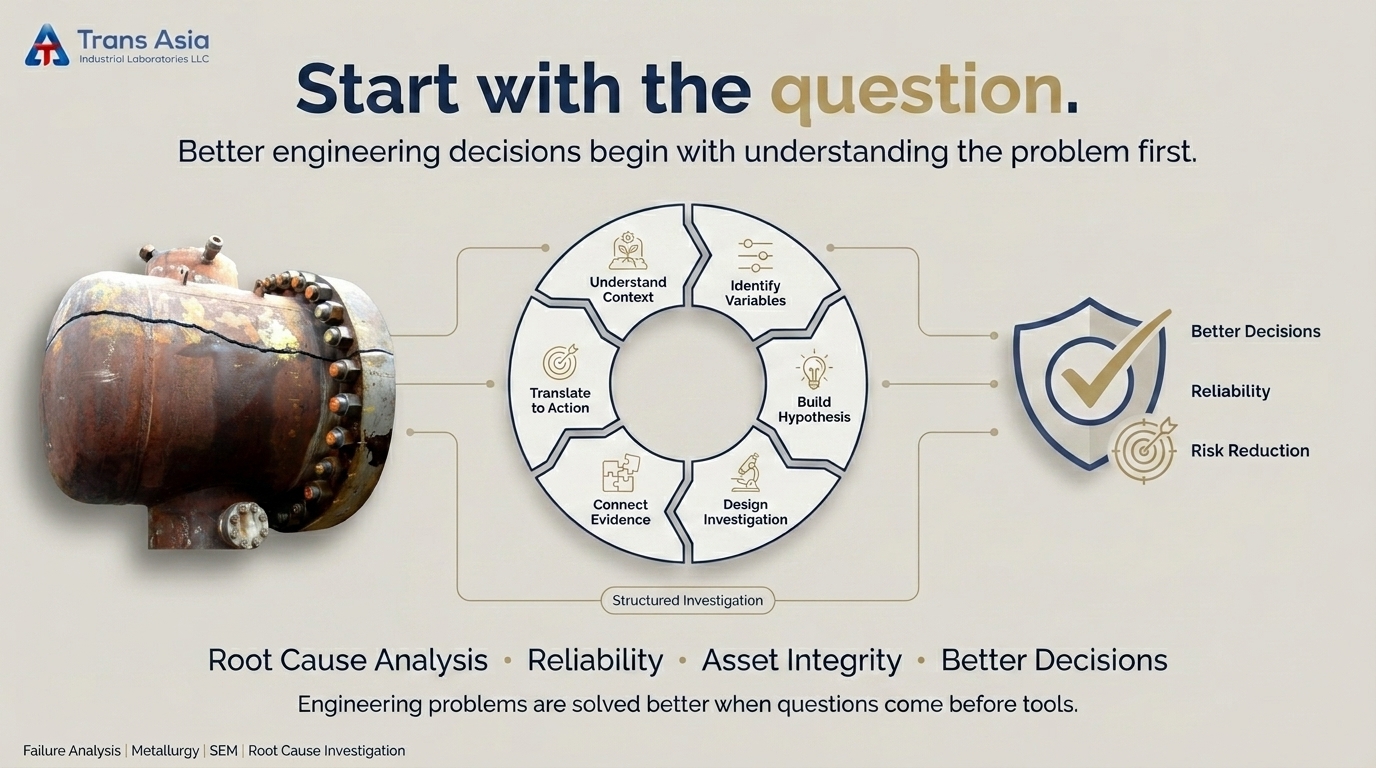
1. Understand the Context
What is the system?
What happened?
What is the actual engineering challenge behind the failure?
2. Identify the Critical Variables
What factors may influence the behavior?
- Material condition
- Geometry & design
- Loading & stress
- Fabrication / processing history
- Service environment
3. Build the Engineering Hypothesis
Before testing begins, we ask:
What mechanism could explain what we are observing?
Fatigue? Corrosion? Hydrogen damage? Metallurgical degradation? Manufacturing defect?
4. Design the Investigation
We select the right techniques based on the question, not the other way around.
- SEM Fractography
- Metallurgical Examination
- Chemical Analysis
- Mechanical Testing
- Replica Metallography
- Advanced NDT
5. Connect Evidence to Root Cause
How do local observations explain the bigger operational problem?
Because identifying where failure occurred is only part of the story.
Understanding why it happened creates value.
6. Translate Findings into Action
The final objective is not simply a report.
It is helping clients make better engineering decisions that improve:
- Reliability
- Asset Integrity
- Safety
- Performance
- Risk Reduction
Better engineering decisions begin with the right questions, structured investigation, and evidence-driven analysis before selecting tools.
- Every catastrophic failure starts as a small indication. Understanding the crack is important. Understanding why it formed is critical.
- Cracks don’t appear overnight. They grow through stress, degradation, fatigue, and overlooked warning signs.
- This isn’t just a crack. It’s a story of stress, material behavior, operating conditions, and time.
- The real cost is not the crack. The real cost is ignoring what caused it.
- Failure happened. The real question is — why? Failure Analysis turns damage into decisions and recurrence prevention.
- When equipment fails, replacing it restores operation. Understanding failure prevents it from happening again.
At Trans Asia Industrial Laboratories, we believe effective engineering is not just about finding answers.
It is about finding answers that prevent the next failure.
📩 Email: [email protected]
🌐 Learn more: Failure Analysis