
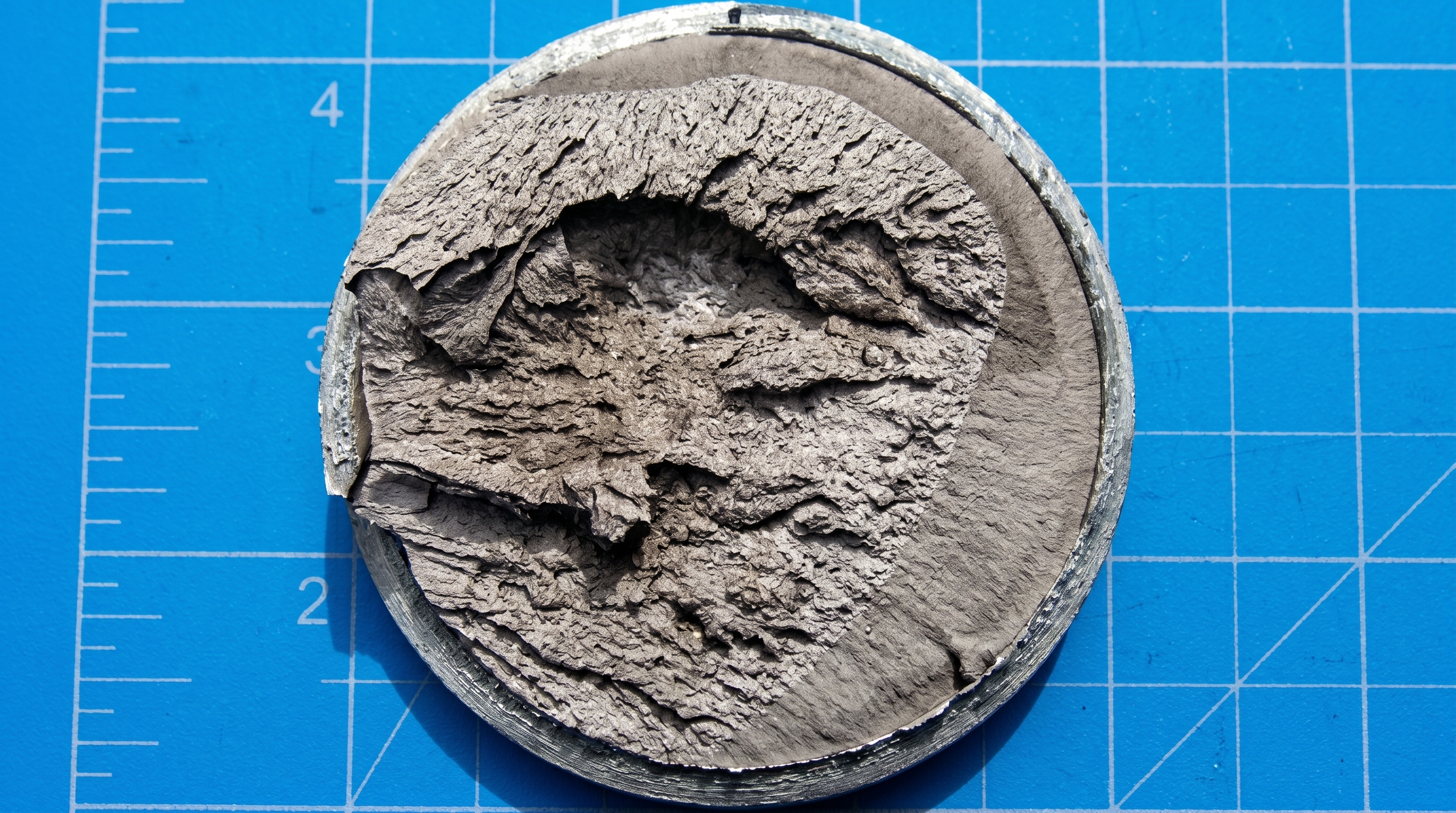
As hardness increases — particularly above ~35 HRC — susceptibility to hydrogen embrittlement can rise significantly, leading to:
❌ Delayed cracking
❌ Sudden brittle failures
❌ Unexpected component breakdowns
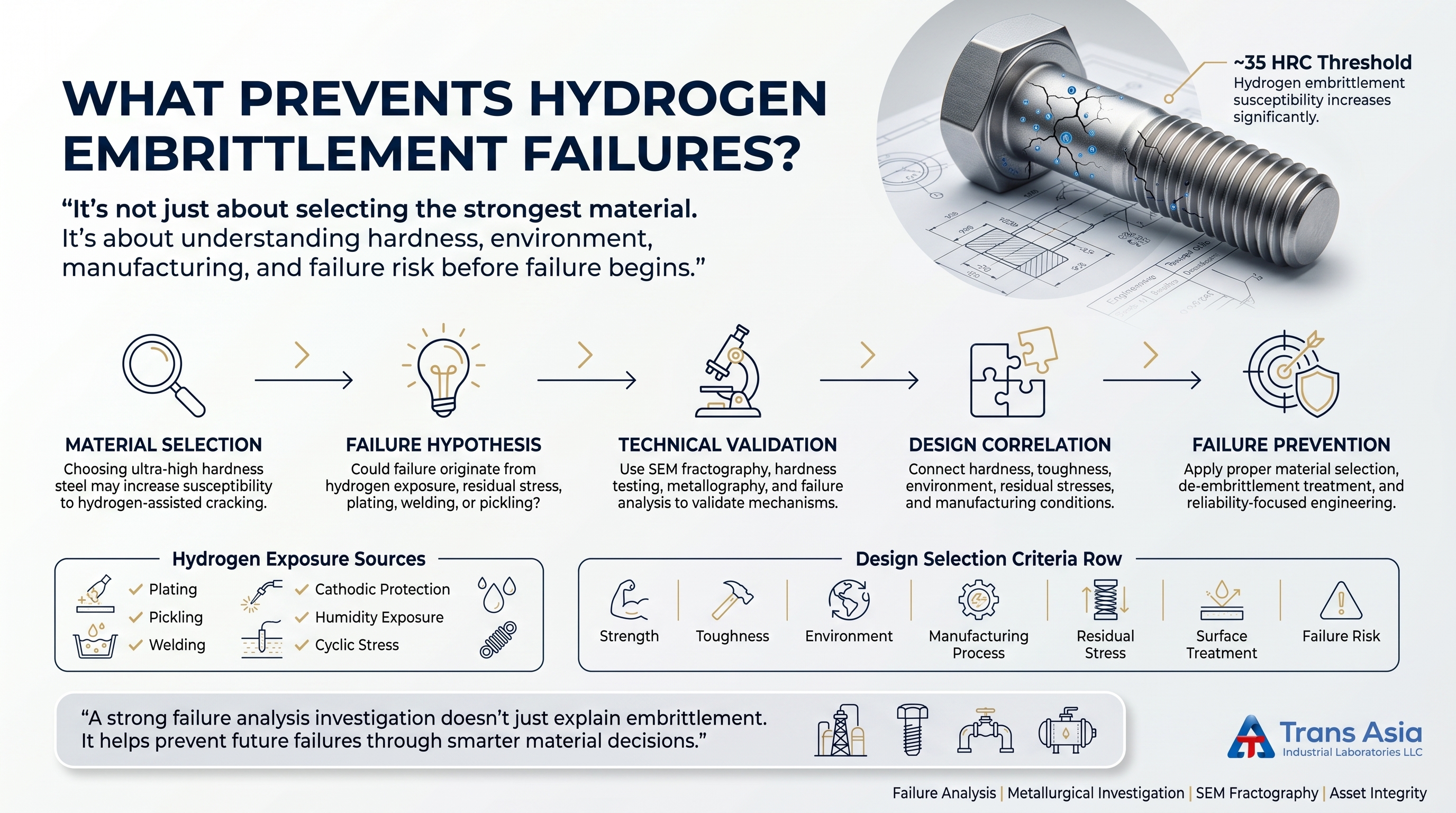
⚠️ Stronger doesn’t always mean safer.
One critical mechanism often overlooked?
🔬 Hydrogen Embrittlement
When designing high-strength components, choosing the highest hardness material may unintentionally increase the risk of failure.
Hydrogen can enter materials through:
✔ Plating
✔ Pickling
✔ Welding processes
✔ Cathodic protection
At Trans Asia Industrial Laboratories, our Failure Analysis & Metallurgical Investigation services help industries understand not only *what failed* — but *why it failed*.
Through advanced investigations including:
🔍 SEM Fractography
🔍 Metallurgical Analysis
🔍 Hardness Evaluation
🔍 Microstructural Assessment
🔍 Root Cause Failure Analysis
we help determine whether failures are linked to:
➡ Hydrogen embrittlement
➡ Improper heat treatment
➡ Excessive hardness
➡ Residual stresses
➡ Material selection issues
Because good engineering is not just about maximizing strength —
it’s about balancing:
Strength + Toughness + Environment + Manufacturing Process + Reliability
Sometimes, a slightly lower-strength material with better toughness creates a far more reliable design than simply maximizing hardness.
📩 Connect with us for advanced Failure Analysis & Metallurgical Investigation services:
🌐 Learn more about our Failure Analysis