
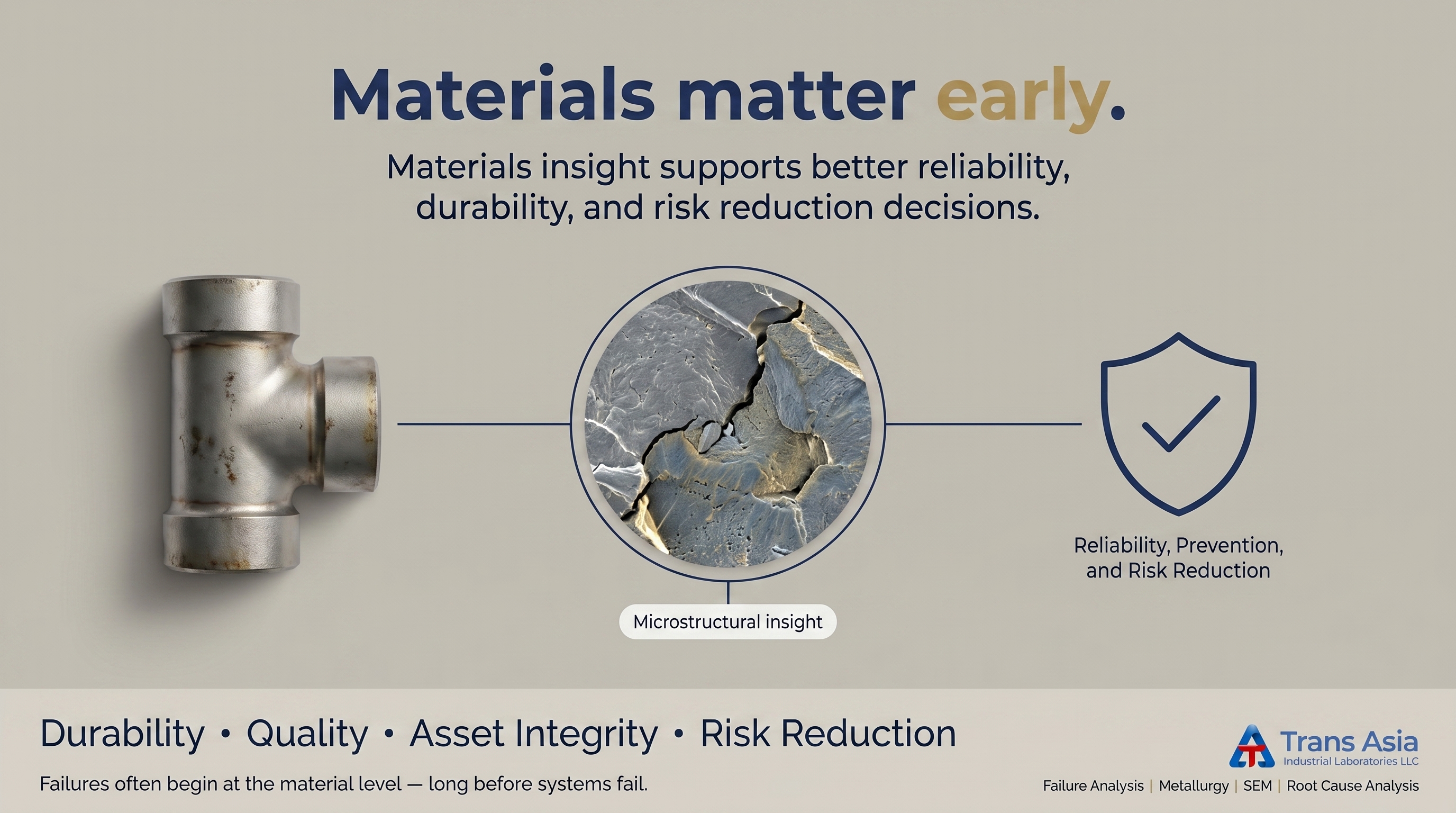
They begin much earlier — at material level.
- A microscopic defect.
- Localized stress.
- An unfavorable microstructure.
- Environmental interaction over time.
Yet in many industries, materials engineers are only brought in after failure occurs.
The real value?
Preventing the failure before it happens.
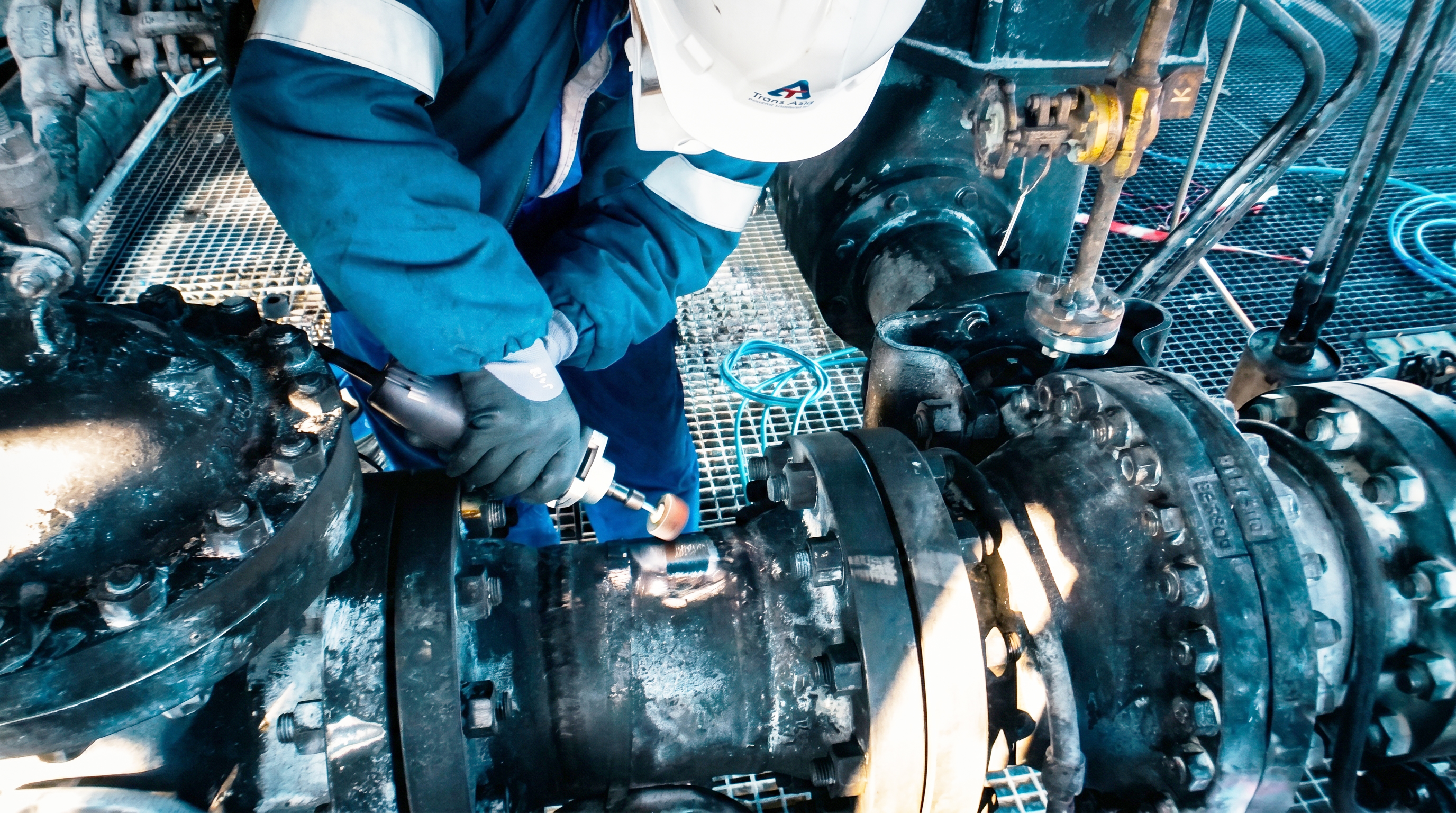
In reliability and durability engineering, failures are rarely random.
A crack, deformation, or unexpected breakdown is often the result of a long interaction between:
- Microstructure
- Manufacturing / processing history
- Local stress concentration
- Operating environment
- Material selection decisions
This is why materials engineering plays a critical role in asset integrity and reliability programs.
Not just to explain why something failed — but to help industries make better decisions before damage begins.
Materials insight can help:
- Identify vulnerable regions before damage occurs
- Understand how fabrication or heat treatment impacts long-term performance
- Detect early indicators such as strain localization or microstructural degradation
- Improve material selection and engineering design decisions
- Reduce reliability risks and unexpected shutdowns
Because reliability is not only about testing.
It is about understanding the material behavior behind performance.
The biggest wins often happen when materials expertise is integrated early in design, fabrication, and operation — not only after something goes wrong.
At Trans Asia Industrial Laboratories, our Failure Analysis, Metallurgical Investigation, SEM Fractography, and Materials Characterization services help industries move from reactive maintenance to proactive reliability.
📩 Email: [email protected]
🌐 Learn More: Failure Analysis