
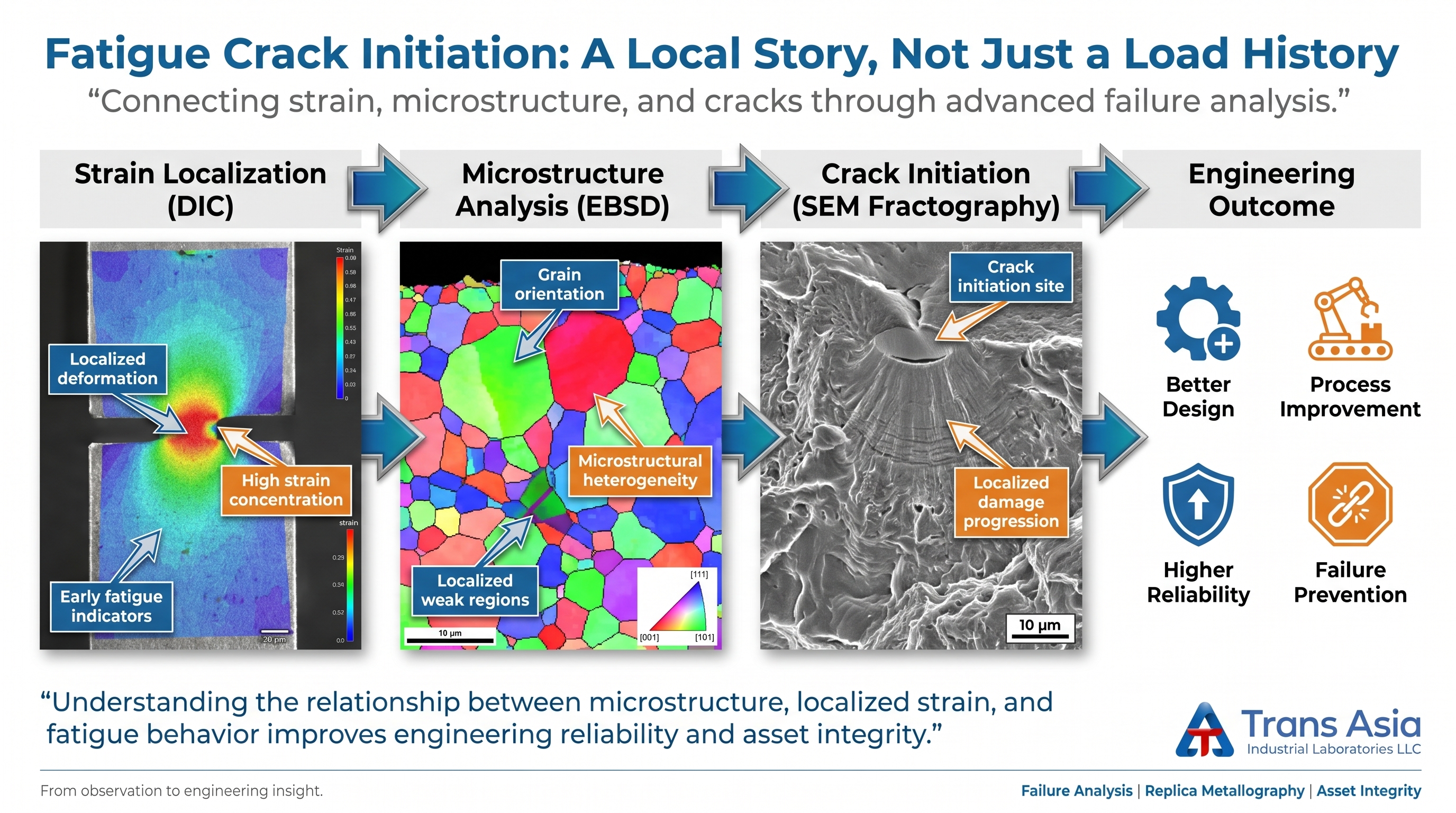
𝗔 𝗳𝗮𝘁𝗶𝗴𝘂𝗲 𝗳𝗮𝗶𝗹𝘂𝗿𝗲 𝗶𝗻𝘃𝗲𝘀𝘁𝗶𝗴𝗮𝘁𝗶𝗼𝗻 𝗶𝘀 𝗻𝗼𝘁 𝗷𝘂𝘀𝘁 𝗮𝗯𝗼𝘂𝘁 𝗳𝗶𝗻𝗱𝗶𝗻𝗴 𝘁𝗵𝗲 𝗰𝗿𝗮𝗰𝗸.
It’s about understanding:
✔ Why it formed
✔ Why it formed there
✔ What it means for the entire system
At Trans Asia Industrial Laboratories, we approach failure analysis as more than defect identification — it is a structured engineering investigation focused on preventing recurrence and improving reliability.
Our approach typically follows five critical stages:
1️⃣ Observation
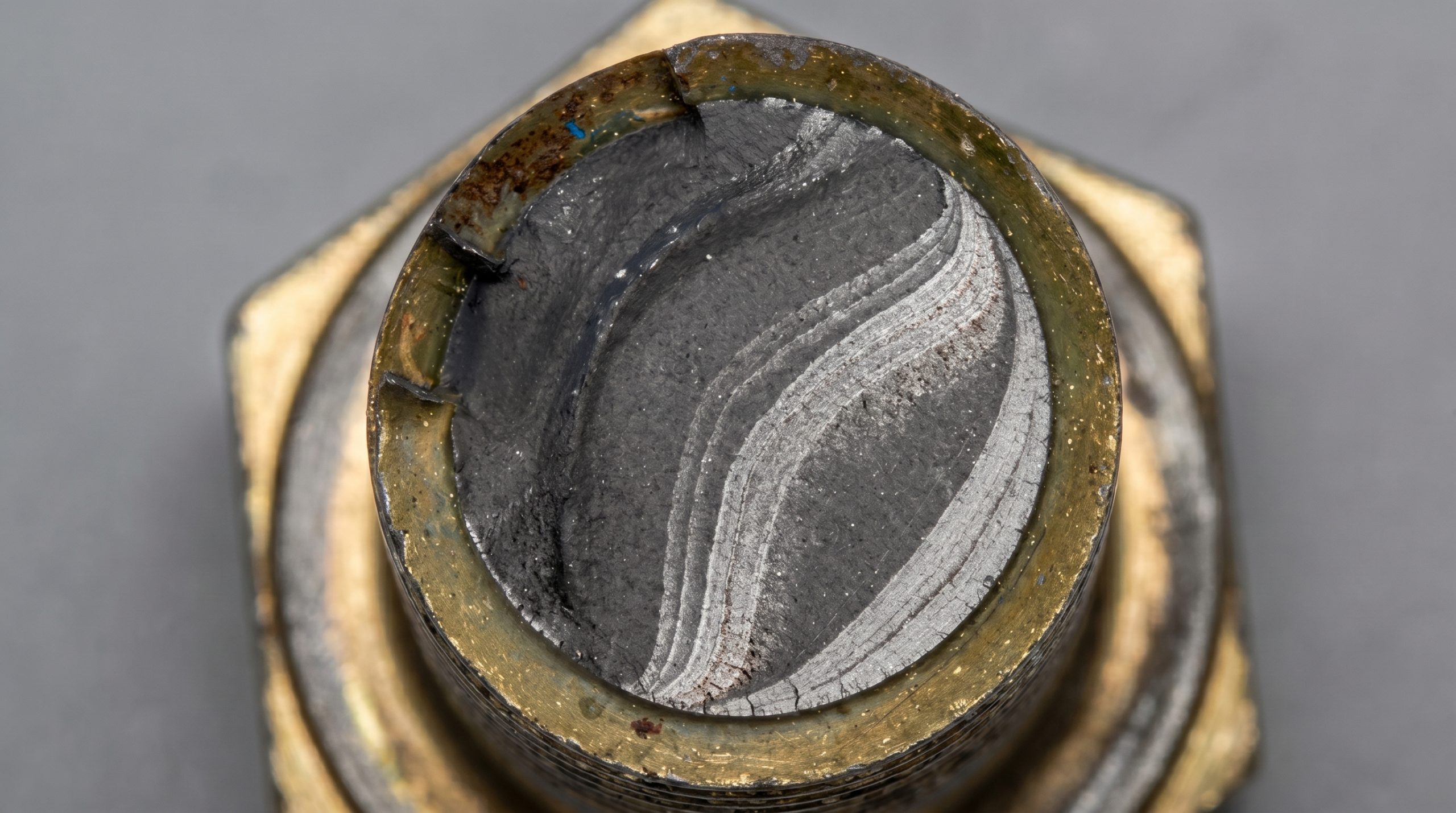
Every failure begins with evidence.
Fracture surfaces, crack morphology, loading history, weld condition, and operational context all reveal part of the story.
2️⃣ Hypothesis
What triggered the failure?
Microstructural degradation?
Stress concentration?
Improper heat treatment?
Material mismatch?
Operational overload?
3️⃣ Validation
This is where engineering meets science.
Using advanced techniques such as:
🔬 SEM Fractography
🔬 Replica Metallography
🔬 Hardness Mapping
🔬 Metallurgical Analysis
🔬 Advanced NDT
…we validate the actual failure mechanism.
4️⃣ Connection
The real insight comes from linking:
➡ Localized damage
➡ Material behavior
➡ Operational conditions
➡ System-wide performance
Because a small crack often reflects a much larger integrity issue.
5️⃣ Recommendation
This is the most valuable step.
A proper failure investigation should lead to:
✔ Better design decisions
✔ Improved welding procedures
✔ Optimized heat treatment
✔ Enhanced inspection strategies
✔ Reduced future failure risks
At Trans Asia, we help industries convert metallurgical evidence into actionable engineering solutions.
Because failure analysis is not just about explaining what happened —
it’s about ensuring it doesn’t happen again.
📩 Connect with us for Failure Analysis & Replica Metallography Services:
👉 [email protected]
🌐 Visit our website: Failure Analysis