
Trans AsiaMechanical Testing
Ensuring Material Integrity
renvoInnovation & Technology
Testing for Mechanical Performance

Fabrication

Construction

On-Time Delivery
Mechanical Test
Accurate mechanical insights for critical applications
Mechanical testing is essential to evaluate the strength, durability, and performance of materials under applied forces and service conditions. At Trans Asia Industrial Laboratories, we provide comprehensive mechanical testing services to assess material properties, verify compliance with international standards, and support quality assurance, failure analysis, and material selection. Our advanced testing capabilities and expert interpretation help industries ensure reliability, safety, and optimal performance of critical components across various applications.
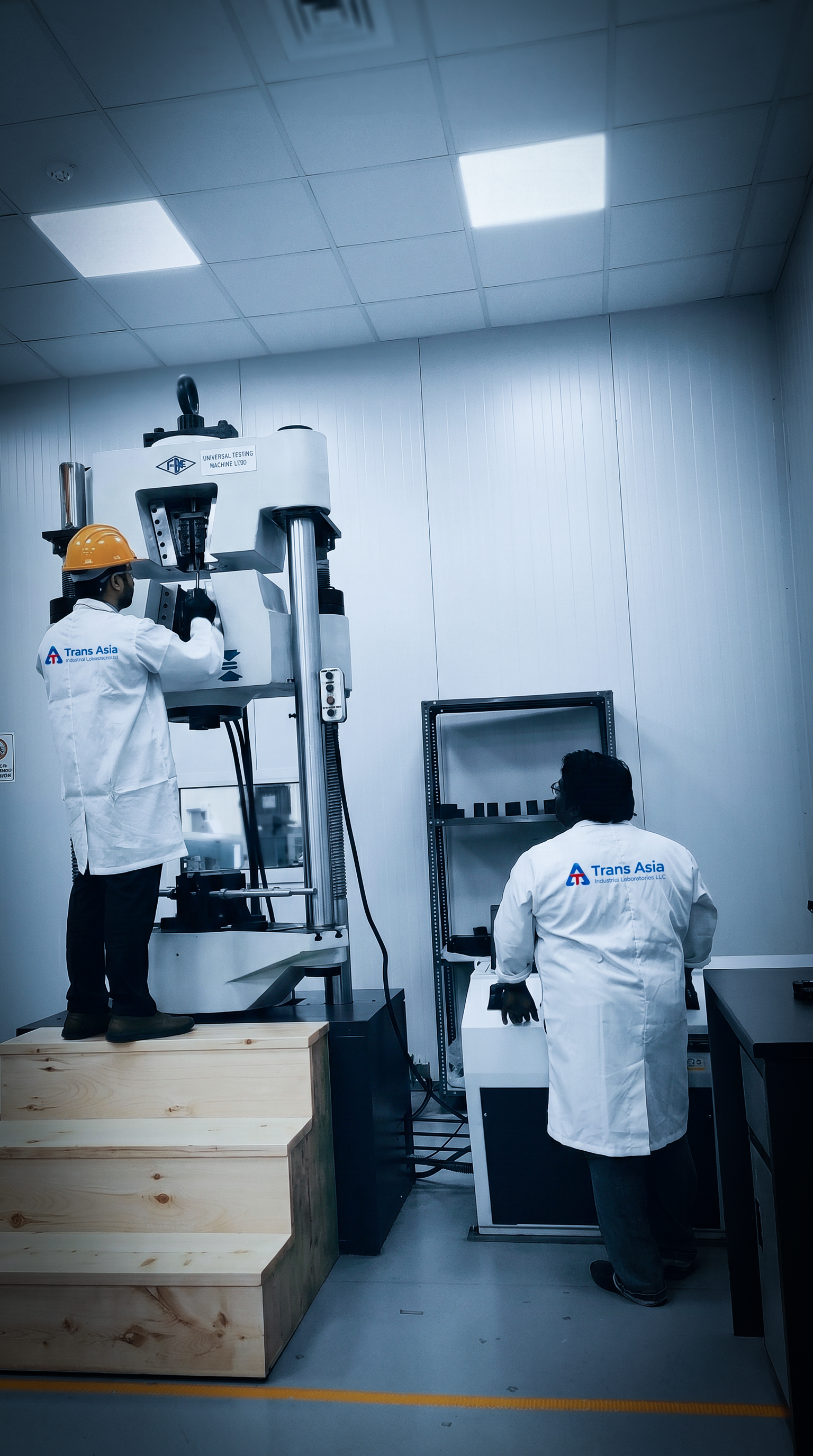
- Tensile Test to determine the Yield strength, Tensile strength, elongation, Reduction of area.
- Hardness test‐ Vickers, Rockwell, Brinell & Micro hardness.
- Macro Hardness Survey on weld coupon.
- Charpy Impact Test for standard & Sub size specimens at ambient, Sub‐zero and cryogenic temperatures
- Bend / Re‐bend Test/ Flattening Test
- Proof Load Tests
- Flattening, Flaring & Fracture Test
- Nick Break Test
- Pull out Test
- Compressive Load Test
- Procedure Qualification Test
- Welder Qualification Test

Our Expertise
Comprehensive Mechanical Testing Solutions for Every Industry
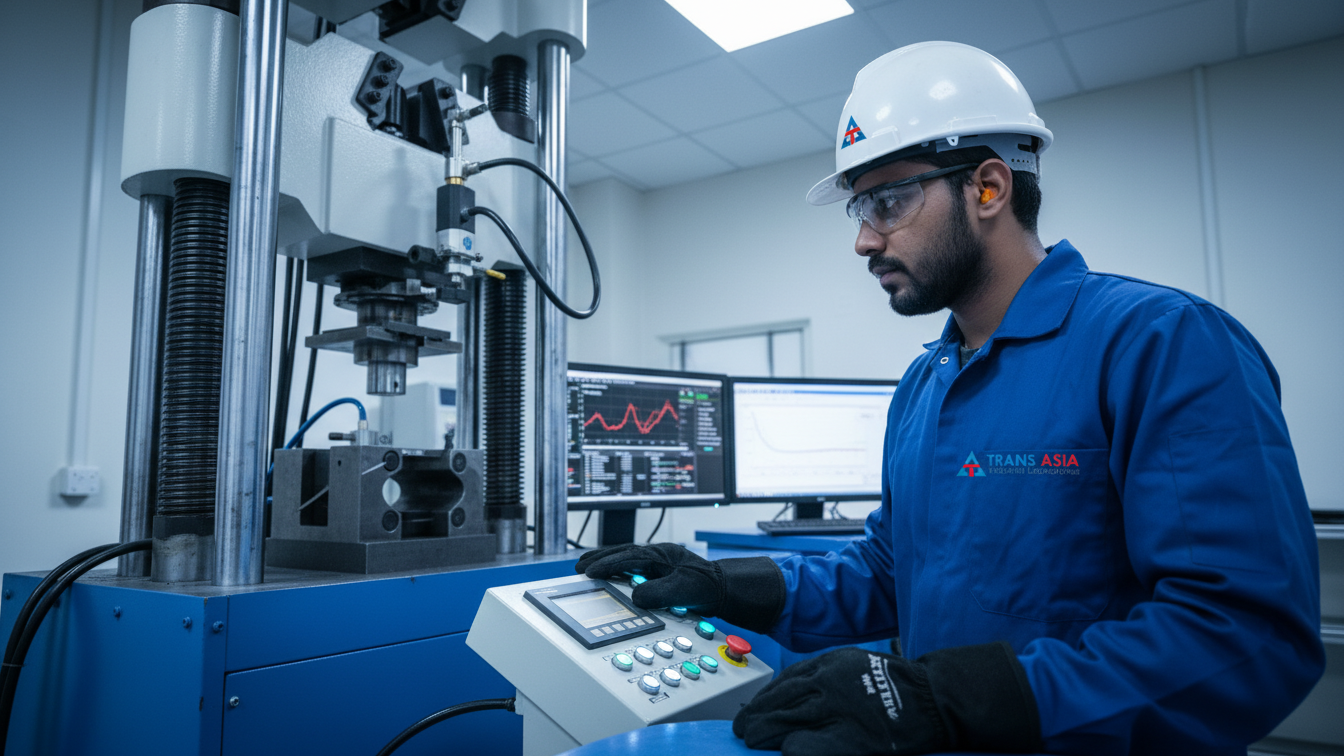
Tensile testing is conducted to determine key mechanical properties such as strength, ductility, and elasticity. The test involves applying a controlled tensile force to a standardized specimen until fracture, generating a stress-strain curve that provides critical insights into material performance under service conditions.

Hardness testing is performed to assess material strength, wear resistance, and consistency of heat treatment processes. It provides quick and reliable insights into material behavior, making it essential for quality control, failure analysis, and verification of engineering components across industries.

This test is performed to assess toughness and resistance to brittle fracture, especially under low-temperature or dynamic loading conditions. The test involves striking a notched specimen with a pendulum hammer and measuring the energy absorbed during fracture, providing valuable insights into material behavior under real service conditions.

Procedure Qualification Testing (PQT) is a critical process used to validate that a specific manufacturing or welding procedure can consistently produce joints meeting required mechanical, metallurgical, and quality standards.

Welder Qualification Testing (WQT) is a critical process to verify that a welder possesses the skill and consistency required to produce sound welds in accordance with approved procedures and applicable codes.
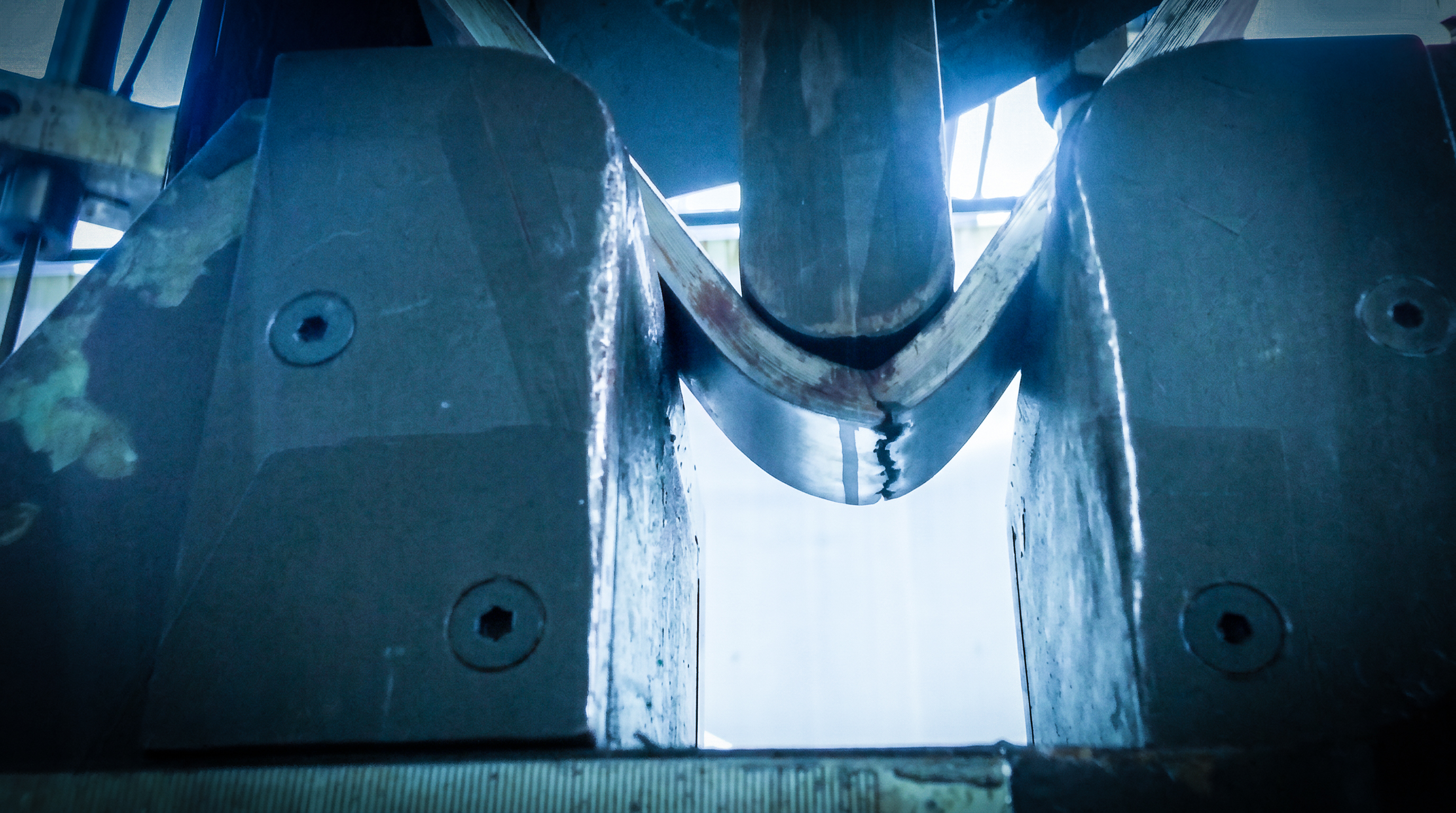
Bend testing is a widely used mechanical test to evaluate the ductility, soundness, and integrity of materials, particularly welded joints.

It is used to determine fracture toughness and understand failure behavior in critical components. By simulating service conditions, fracture tests reveal whether a material will fail in a brittle or ductile manner, providing essential data for design validation, material selection, and integrity assessment.

Mechanical Test
Tensile Testing
Tensile testing is one of the most fundamental mechanical tests used to evaluate the behavior of materials under uniaxial loading. At Trans Asia Industrial Laboratories, tensile testing is conducted to determine key mechanical properties such as strength, ductility, and elasticity. The test involves applying a controlled tensile force to a standardized specimen until fracture, generating a stress-strain curve that provides critical insights into material performance under service conditions.
Key Parameters Measured
Ultimate tensile strength, yield strength, and elongation are determined to assess material capability under load.
Reduction in area and modulus of elasticity provide insight into deformation behavior.
Stress-strain characteristics help identify elastic and plastic regions.
Fracture point indicates failure limits under tensile loading.
Ductility measurement supports evaluation of forming and service performance.
The testing process is carried out using a Universal Testing Machine (UTM), where specimens are gripped and subjected to gradually increasing load. The deformation is continuously recorded, allowing precise measurement of strain and stress. The resulting data is used to plot the stress-strain curve, which is essential for understanding material response and verifying compliance with design requirements and standards.
Test Procedure
Preparation of standardized specimens as per ASTM, ISO, or relevant specifications ensures consistency and accuracy.
Specimen is mounted in the UTM with proper alignment to avoid bending stresses.
Load is applied gradually at a controlled rate until failure occurs.
Extension or strain is measured using extensometers or machine sensors.
Data is recorded and analyzed to generate stress-strain curves and key results.
ASTM E8 : Standard Test Methods for Tension Testing of Metallic Materials
ASTM A370 : Standard Test Methods and Definitions for Mechanical Testing of Steel Products
ASTM B557 : Standard Test Methods for Tension Testing Wrought and Cast Aluminum- and Magnesium-Alloy Products
ISO 6892-1 : Metallic materials — Tensile testing — Part 1: Method of test at room temperature
ISO 898-1 : Mechanical properties of fasteners made of carbon steel and alloy steel — Part 1: Bolts, screws and studs with specified property classes — Coarse thread and fine pitch thread
Tensile testing plays a vital role in material verification, quality control, and failure analysis. It helps confirm whether a material meets specified mechanical requirements and performs as expected in service. Variations in tensile properties can indicate issues such as improper heat treatment, material degradation, or manufacturing defects.
At Trans Asia Industrial Laboratories, tensile testing is carried out using a 1000 kN Universal Testing Machine (UTM), ensuring precise and reliable measurement of material properties under tension. Our advanced equipment is capable of evaluating a wide range of materials including carbon steel, alloy steel, cast iron, stainless steel, aluminum, copper, and other engineering materials.
Tests Performed on Universal Testing Machine (UTM):
All Weld Tensile Test
Transverse Tensile Test
Longitudinal Tensile Test
Through Thickness Tensile Test
Pull-Out Test
Compression Test
Shear Test
These tests support material qualification, quality control, and performance evaluation across various industrial applications.
Applications of Tensile Testing
Verification of material properties for compliance with engineering standards and specifications.
Evaluation of weld quality and heat-affected zones in fabricated components.
Support for failure analysis by identifying material weaknesses or degradation.
Material selection and comparison for design optimization.
Quality assurance in manufacturing and production processes.
At Trans Asia Industrial Laboratories, tensile testing is performed with high precision and adherence to international standards, ensuring reliable and repeatable results. Our expertise enables clients to make informed decisions regarding material performance, safety, and long-term reliability, making tensile testing a critical tool in engineering and industrial applications.

Mechanical Test
Hardness Testing
Hardness testing is a fundamental mechanical evaluation used to determine a material’s resistance to localized plastic deformation, typically by indentation. At Trans Asia Industrial Laboratories, hardness testing is performed to assess material strength, wear resistance, and consistency of heat treatment processes. It provides quick and reliable insights into material behavior, making it essential for quality control, failure analysis, and verification of engineering components across industries.
Common Hardness Testing Methods
Brinell Hardness Test (HB) uses a hardened steel or carbide ball indenter for testing coarse or heterogeneous materials like castings and forgings.
Rockwell Hardness Test (HR) measures depth of indentation using different scales, suitable for rapid testing in production environments.
Vickers Hardness Test (HV) uses a diamond pyramid indenter, ideal for precise measurements and thin materials.
Microhardness Testing evaluates very small areas, coatings, or phases using low loads and high magnification.
Knoop Hardness Test (HK) is used for brittle materials and thin layers requiring minimal penetration depth.
The testing process involves applying a specific load through an indenter onto the material surface and measuring the resulting indentation. The size or depth of the indentation correlates directly with hardness values. Proper surface preparation, load selection, and calibration are critical to ensure accurate and repeatable results, especially for high-precision applications.
At Trans Asia Industrial Laboratories, we also offer on-site hardness evaluation using portable hardness testing equipment to support asset integrity assessments. This service enables evaluation of material susceptibility to cracking under actual service environments and helps identify microstructural changes or degradation in critical engineering components.
Applicable Testing Standards:
ASTM E92 – Vickers and Knoop Hardness of Metallic Materials
ASTM E384 – Micro-indentation Hardness Testing
ASTM E18 – Rockwell Hardness Testing
ASTM E110 – Portable Hardness Testing Methods
BS EN ISO 6507-1 – Vickers Hardness Test
BS EN ISO 6508-1 – Rockwell Hardness Test
Testing is also conducted in accordance with major international codes and specifications, including ABS, DNV, BV, LR, RINA, and NK, ensuring compliance with global industry requirements.
Key Parameters & Considerations
Selection of appropriate test method based on material type, thickness, and surface condition.
Load application and dwell time must comply with relevant ASTM or ISO standards.
Surface preparation including polishing to remove irregularities affecting indentation accuracy.
Calibration of equipment to ensure consistency and reliability of results.
Interpretation of hardness values in relation to material properties and specifications.
Hardness testing is widely used in material verification, heat treatment evaluation, and failure analysis. It helps detect variations in material properties, identify soft or brittle zones, and assess the effectiveness of processes such as hardening, tempering, or case carburizing. Variations in hardness often indicate underlying issues such as improper processing, material degradation, or localized damage.
Applications of Hardness Testing
Verification of material strength and compliance with engineering specifications.
Evaluation of heat treatment processes such as quenching, tempering, and case hardening.
Detection of material inconsistencies, defects, or degraded zones in components.
Support for failure analysis by identifying abnormal hardness variations.
Quality control in manufacturing to ensure uniformity and performance reliability.
At Trans Asia Industrial Laboratories, hardness testing is carried out using advanced equipment and strict adherence to international standards. Our expertise ensures accurate measurement and interpretation, helping clients make informed decisions regarding material performance, durability, and suitability for critical applications.
Mechanical Test
Impact Testing
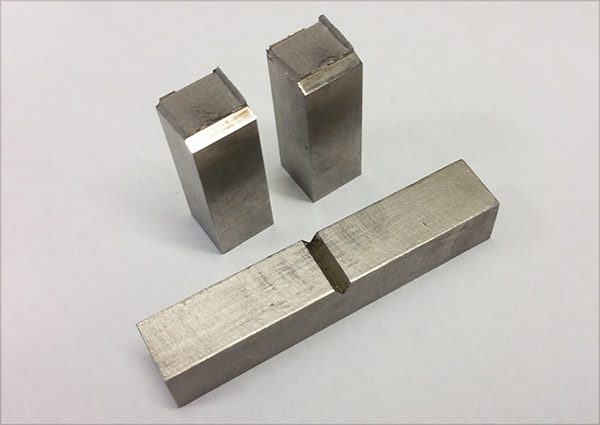
Charpy Impact Testing is a critical mechanical test used to evaluate a material’s ability to absorb energy during sudden impact. At Trans Asia Industrial Laboratories, this test is performed to assess toughness and resistance to brittle fracture, especially under low-temperature or dynamic loading conditions. The test involves striking a notched specimen with a pendulum hammer and measuring the energy absorbed during fracture, providing valuable insights into material behavior under real service conditions.
Key Parameters Measured
- Impact energy absorbed by the specimen during fracture, indicating material toughness under sudden loading conditions.
- Notch sensitivity, which reflects how the presence of stress concentrators affects fracture behavior.
- Ductile-to-brittle transition temperature (DBTT) for evaluating performance at varying temperatures.
- Fracture appearance, distinguishing between ductile and brittle failure modes.
- Lateral expansion or reduction in cross-section after fracture for additional toughness assessment.
The test is conducted using a Charpy impact testing machine, where a standardized specimen with a notch is placed horizontally between supports. A pendulum hammer is released from a fixed height to strike the specimen. The difference between the initial and final energy of the pendulum is recorded as the absorbed impact energy. This value is essential for determining the material’s resistance to sudden failure.
Test Procedure
- Preparation of standard notched specimens (V-notch or U-notch) as per ASTM or ISO requirements.
- Conditioning of specimens at specified temperatures for accurate evaluation of service conditions.
- Positioning of the specimen horizontally on supports within the testing machine.
- Release of pendulum hammer to fracture the specimen in a single impact.
- Recording and analysis of absorbed energy and fracture characteristics.
Charpy testing is widely used in industries where materials are subjected to dynamic loads or low temperatures, such as oil & gas, construction, and power generation. It is particularly important for evaluating welds and heat-affected zones, where changes in microstructure can significantly influence toughness and fracture resistance.
At Trans Asia Industrial Laboratories, we offer on-site hardness testing services using portable equipment to support asset integrity assessments. This enables evaluation of material susceptibility to cracking under actual service environments and helps predict potential microstructural changes or degradation in critical engineering components.
Applicable Testing Standards:
- ASTM E92 – Vickers and Knoop Hardness Testing of Metallic Materials
- ASTM E384 – Micro-indentation Hardness Testing
- ASTM E18 – Rockwell Hardness Testing
- ASTM E110 – Portable Indentation Hardness Testing
- BS EN ISO 6507-1 – Vickers Hardness Test Method
- BS EN ISO 6508-1 – Rockwell Hardness Test Method
Testing is also carried out in accordance with major international classification and regulatory standards, including ABS, DNV, BV, LR, RINA, and NK, ensuring full compliance with global industry requirements.
Applications of Charpy Impact Testing
- Evaluation of material toughness for structural and pressure-containing components.
- Assessment of weld quality and heat-affected zones in fabricated structures.
- Determination of ductile-to-brittle transition temperature for critical applications.
- Support for failure analysis by identifying brittle fracture tendencies.
- Quality control to ensure compliance with international standards and specifications.
At Trans Asia Industrial Laboratories, Charpy Impact Testing is conducted with strict adherence to international standards and advanced instrumentation, ensuring accurate and reliable results. Our expertise enables clients to evaluate material performance under impact conditions, helping prevent sudden failures and ensuring structural integrity in demanding applications.
Mechanical Test
Procedure Qualification Testing
Procedure Qualification Testing (PQT) is a critical process to verify that a welding or fabrication procedure can consistently produce joints meeting required mechanical, metallurgical, and quality standards. At Trans Asia Industrial Laboratories, PQT ensures compliance with international codes while validating real-world performance of welding procedures under controlled conditions, supporting safety, reliability, and regulatory acceptance across industries.
Applicable Standards & Marine Class
- ASME BPVC Section IX and AWS D1.1 for welding qualification across pressure vessels and structural applications.
- Marine classifications including DNV, LR, ABS, ClassNK, IRS, GL, and RINA ensuring offshore and marine compliance.
- International standards such as API and BS codes for broader industrial acceptance.
- ISO standards covering procedure qualification for various materials and welding processes.
- Compliance with client-specific and project-specific requirements across industries.
The PQT process involves preparing weld coupons using specified procedures, followed by extensive testing to evaluate weld integrity and performance. This ensures that procedures are capable of delivering consistent results before implementation in production. It also establishes documented evidence required for certification and approval by regulatory bodies and clients.
Typical Qualification Tests
- Non-destructive testing including radiography, magnetic particle testing, and liquid penetrant testing to detect internal and surface defects.
- Mechanical testing such as tensile, bend, and Charpy impact tests to evaluate strength and toughness.
- Metallurgical evaluation through macro etch and microstructural examination for weld quality assessment.
- Hardness survey across weld zones to identify variations in material properties.
- Additional specialized tests based on project requirements and applicable standards.
At Trans Asia Industrial Laboratories, we bring decades of expertise in welding procedure qualification, serving clients across the UAE and globally. Our experienced team is well-versed in the latest welding codes and industry requirements, ensuring accurate qualification and compliance. Our facilities in Dubai and Abu Dhabi are equipped with advanced testing capabilities to support complete material and weld evaluation.
Testing Capabilities
- Comprehensive mechanical testing including tensile, bend, fracture, impact, and hardness testing for weld qualification.
- Advanced metallurgical analysis including macro examination and microstructure evaluation for weld integrity assessment.
- Corrosion testing capabilities to evaluate environmental performance of welded joints.
- Non-destructive testing methods for defect detection without damaging the specimen.
- End-to-end testing solutions supporting full procedure qualification requirements.
Our PQT services cover a wide range of international standards, ensuring compliance with global industry requirements. We routinely perform testing against major codes and specifications, enabling clients to meet stringent quality and safety expectations in critical applications.
Key International Standards Covered
- ASME Section IX, Section II Part C, and AWS codes including D1.1, D1.2, D1.6, and B2.1 for welding qualifications.
- BS EN ISO 15614 series covering procedure qualification for steels, aluminum, copper, nickel alloys, and cast irons.
- BS EN ISO 15612 and 15610 for qualification through standard procedures and consumables.
- API and other international specifications for oil & gas and industrial applications.
- Compliance with marine and classification society requirements for offshore and shipbuilding sectors.
At Trans Asia Industrial Laboratories, PQT is executed with precision, expertise, and strict adherence to standards—ensuring reliable welding procedures, enhanced quality control, and long-term performance of critical engineering structures.
Mechanical Test
Welder Qualification Testing
Welder Qualification Testing (WQT) is essential to ensure that welders possess the skill, consistency, and technical understanding required to produce high-quality welds. The performance of the welding operator is a critical factor in achieving sound welds; therefore, verifying welder capability before project execution is vital. At Trans Asia Industrial Laboratories, we assess welder performance through controlled testing, ensuring compliance with applicable codes and confidence in weld quality for critical applications.
Objectives of Welder Qualification
- Verify welder skill in producing defect-free welds under specified procedures, materials, and positions in compliance with industry standards.
- Ensure consistency and repeatability in weld quality, minimizing variability due to operator performance.
- Demonstrate capability to follow Welding Procedure Specifications (WPS) accurately.
- Build confidence among clients and stakeholders through certified welder performance.
- Establish documented evidence of welder competency for regulatory and project requirements.
Welder performance is evaluated by preparing test weld coupons representative of the intended job conditions. These coupons are welded using approved procedures and then tested as per relevant codes and standards. Successful completion confirms the welder’s ability to produce sound welds and operate within defined qualification limits.
Qualification Test Methods
- Non-destructive testing such as radiography, magnetic particle testing, and liquid penetrant testing to detect internal and surface defects.
- Visual inspection to assess weld appearance, bead profile, and workmanship quality.
- Mechanical testing including tensile, bend, and Charpy impact tests to evaluate strength and toughness.
- Metallurgical evaluation through macro etch and microstructural examination.
- Weld hardness survey to assess variations across weld, heat-affected zone, and base metal.
At Trans Asia Industrial Laboratories, our mechanical testing facilities play a key role in qualifying both welding procedures and welders through PQR and WQT testing. We provide integrated services including NDT, mechanical testing, and metallurgical evaluation, ensuring accurate and timely results with minimal turnaround time.
Applicable Standards & Codes
- ASME BPVC Section IX and Section II Part C for welding qualifications and consumables.
- AWS standards including D1.1, D1.2, D1.6, and B2.1 for structural welding applications.
- BS EN ISO standards such as 9606 series and ISO 14732 for welder and operator qualification.
- Marine classification standards including DNV, LR, ABS, ClassNK, IRS, GL, and RINA.
- Compliance with project-specific and international specifications across industries.
Welder qualification ensures that individuals can consistently follow approved procedures and produce reliable welds under actual working conditions. It is particularly critical in industries such as oil & gas, construction, fabrication, and marine, where weld integrity directly impacts safety and performance.
Key Evaluation Parameters
- Welding position and technique to assess skill across different orientations and applications.
- Material type, thickness, and joint configuration to define qualification range.
- Adherence to WPS parameters including heat input, travel speed, and consumables.
- Weld quality including penetration, fusion, and absence of defects.
- Consistency of results across multiple test samples.
At Trans Asia Industrial Laboratories, we combine advanced testing capabilities with industry expertise to deliver reliable welder qualification services. Our approach ensures compliance with global standards, enhances weld quality, and builds confidence in fabrication processes for critical engineering projects.

Mechanical Test
Bend Testing
Bend testing is a widely used mechanical test to evaluate the ductility, soundness, and integrity of materials, particularly welded joints. At Trans Asia Industrial Laboratories, bend testing is performed as a qualitative method to assess how a material behaves under plastic deformation. As the name suggests, the specimen is subjected to controlled bending to induce stress in the area of interest. This process helps reveal inherent defects and provides insight into the material’s susceptibility to cracking under service conditions.
Types of Bend Tests
- Face bend test evaluates the weld face under tension, helping detect surface defects such as cracks, porosity, or lack of fusion.
- Root bend test focuses on the weld root to identify penetration issues or internal discontinuities.
- Side bend test examines the full cross-section of the weld for internal defects and uniformity.
- Guided bend test ensures controlled deformation using fixtures for consistent and repeatable results.
- Free bend test allows unrestricted bending to assess overall ductility and flexibility of the material.
The test involves bending a prepared specimen around a mandrel or die to a specified angle, typically up to 180°, depending on applicable standards. After bending, the specimen is carefully examined for cracks or discontinuities on the tension surface. A defect-free result indicates good ductility and weld quality, while the presence of cracks suggests material weakness, improper welding, or internal defects.
Test Procedure
- Preparation of specimens according to applicable standards, ensuring proper dimensions and surface finish for accurate testing.
- Placement of specimen in a bending fixture with correct alignment to avoid uneven stress distribution.
- Application of controlled force to bend the specimen to the required angle.
- Visual examination of the bent surface to detect cracks, tears, or discontinuities.
- Documentation and evaluation of results against acceptance criteria defined by standards.
Bend testing plays an essential role in weld quality control, particularly in Procedure Qualification Testing (PQT) and Welder Qualification Testing (WQT). It provides direct evidence of a weld’s ability to withstand deformation without failure, ensuring compliance with applicable codes and building confidence in fabrication quality.
Applications & Significance
- Assessment of material ductility and ability to undergo plastic deformation without failure.
- Detection of inherent defects such as inclusions, lack of fusion, or porosity in welds.
- Qualification of welding procedures and welder performance as per international standards.
- Evaluation of material susceptibility to cracking under applied stress.
- Support for quality assurance and failure analysis in critical engineering components.
At Trans Asia Industrial Laboratories, the size of the specimen and the degree of bending are selected based on material type, application, and relevant standards. Our testing is conducted in accordance with internationally recognized codes, ensuring accurate and reliable results.
Applicable Standards
- BS EN ISO 15614-1 – Welding procedure qualification for steels and nickel alloys
- ASME Section IX – Welding, brazing, and fusing qualifications
- AWS D1.1 / D1.2 – Structural welding codes for steel and aluminum
- BS EN ISO 5173 – Bend testing of welds in metallic materials
- API 1104 – Welding standards for pipelines and related facilities
With advanced facilities and expert evaluation, Trans Asia Industrial Laboratories delivers precise bend testing services to ensure weld integrity, compliance, and long-term reliability of engineered components.

Mechanical Test
Fracture Testing
Fracture testing, commonly referred to as the fillet weld break test, is a destructive method used to evaluate the overall weld quality across the entire fillet weld, rather than at a localized section as in macro examination. This test provides a clear and direct assessment of weld integrity by exposing internal features such as root penetration, fusion, and potential discontinuities.
At Trans Asia Industrial Laboratories, fracture testing is performed by subjecting fillet weld coupons to controlled loading until fracture occurs. The fractured surface is then examined to assess weld soundness, particularly focusing on critical areas such as weld start/stop locations, which are often prone to defects. This method is highly effective in identifying potential failure zones and ensuring weld reliability.
Key Evaluation Aspects
- Assessment of root penetration and fusion across the weld joint
- Identification of discontinuities such as porosity, slag inclusions, and lack of fusion
- Examination of weld quality at start and stop points
- Evaluation of fracture characteristics and defect distribution
- Verification of overall weld integrity and workmanship
The fracture test complements other mechanical tests such as bend testing by providing additional insight into internal weld conditions. It is widely used in welding procedure qualification (PQT) and welder qualification testing (WQT) to ensure compliance with applicable standards and specifications.
Applicable Standards
- ISO 9017 – Destructive testing of welds: Fracture test
- ASME Section IX – Welding, brazing, and fusing qualifications
- ISO 5817 – Quality levels for imperfections in fusion-welded joints
- API 1104 – Welding standards for pipelines and related facilities
With advanced facilities and expert evaluation, Trans Asia Industrial Laboratories ensures accurate fracture testing to validate weld quality, detect hidden defects, and support reliable fabrication practices in critical engineering applications.
